2026 Social Security COLA: 3.5% Benefit Increase Expected

The 2026 Social Security Cost-of-Living Adjustment (COLA) is projected to increase benefits by 3.5% for US retirees, providing a vital financial uplift.
The anticipation around the 2026 Social Security COLA is building, with projections indicating a substantial 3.5% increase in benefits for millions of US retirees. This adjustment is not merely a number; it represents a critical lifeline for maintaining purchasing power in an evolving economic landscape.
Understanding the Social Security COLA Mechanism
The Cost-of-Living Adjustment (COLA) for Social Security is a vital annual recalibration designed to help beneficiaries maintain their purchasing power against inflation. Each year, the Social Security Administration (SSA) reviews economic data to determine if an adjustment is necessary. This mechanism is crucial for retirees, ensuring their fixed incomes can keep pace with rising costs of living, from groceries to healthcare.
The calculation of COLA is tied directly to the Consumer Price Index for Urban Wage Earners and Clerical Workers (CPI-W). This specific index measures the average change over time in the prices paid by urban consumers for a market basket of consumer goods and services. By using the CPI-W, the SSA aims to reflect the actual cost increases experienced by the demographic most reliant on these benefits.
How COLA is Calculated
The Social Security Administration compares the average CPI-W for the third quarter of the current year (July, August, September) with the average for the third quarter of the last year in which a COLA became effective. If there is an increase, the percentage increase becomes the COLA. If there is no increase, there is no COLA for that year.
- CPI-W Data: The primary driver for COLA calculations.
- Third Quarter Averages: Comparison of July-September CPI-W data year-over-year.
- Benefit Protection: Designed to prevent erosion of purchasing power due to inflation.
Understanding the COLA mechanism is essential for retirees and those planning for retirement. It provides transparency into how benefit adjustments are made and why they are so important. The annual announcement offers a clear picture of how economic trends are directly impacting the financial stability of millions.
The 3.5% Projection for 2026: What Drives It?
The projected 3.5% increase for the 2026 Social Security COLA is a significant figure that reflects ongoing economic conditions. This forecast is not arbitrary; it is rooted in observed inflation trends and expert analyses of consumer price indices. Several factors contribute to this projection, primarily the persistent inflationary pressures that have been impacting the US economy.
Economists and analysts closely monitor various economic indicators, including energy prices, housing costs, and the broader supply chain dynamics. These elements directly influence the CPI-W, which is the benchmark for COLA. When these costs rise consistently, it creates an environment where a substantial COLA becomes probable to offset the increased living expenses for beneficiaries.
Key Economic Indicators Influencing COLA
The trajectory of inflation is paramount. While inflation rates can fluctuate, sustained increases in specific sectors exert considerable pressure on the CPI-W. The labor market also plays a role; a robust job market can sometimes lead to higher consumer spending and, consequently, upward price pressures.
- Inflation Rates: Core inflation and headline inflation figures.
- Energy Prices: Fluctuations in oil and gas directly affect transportation and utility costs.
- Housing Market: Rising rents and home prices contribute significantly to living expenses.
The 3.5% projection for 2026 suggests that while some inflationary pressures may moderate, they are expected to remain elevated enough to warrant a substantial adjustment. This outlook provides a glimpse into the economic landscape retirees will navigate in the coming year, highlighting the continued importance of Social Security benefits.
Impact on US Retirees: Financial Implications and Planning
A 3.5% increase in Social Security benefits for 2026 will have a tangible impact on the financial well-being of millions of US retirees. For many, Social Security represents a primary, if not sole, source of income. This adjustment means a direct boost to their monthly checks, which can help cover essential expenses that have likely increased due to inflation.
Retirees often operate on fixed budgets, making any increase in benefits a critical component of their financial stability. The extra funds can be allocated to various necessities, from rising healthcare premiums to daily living costs. It also offers a degree of peace of mind, knowing that their benefits are being adjusted to reflect current economic realities.
Navigating Increased Costs with COLA
While a 3.5% COLA is beneficial, it is important for retirees to consider how it interacts with other financial aspects. For instance, Medicare Part B premiums are often deducted directly from Social Security benefits. An increase in COLA could potentially be offset by higher Medicare costs, though the ‘hold harmless’ provision typically protects most beneficiaries from a reduction in net benefits.
- Budget Adjustments: Re-evaluating monthly budgets to incorporate the increased benefit.
- Healthcare Costs: Understanding the interplay between COLA and Medicare premiums.
- Investment Strategies: Considering how increased benefits might affect overall retirement savings and withdrawals.
Financial planning for retirees in 2026 should factor in this anticipated COLA. It provides an opportunity to reassess their spending, savings, and investment strategies. While it offers a welcome boost, a holistic approach to financial management remains crucial for long-term security.
Historical COLA Trends and Future Outlook
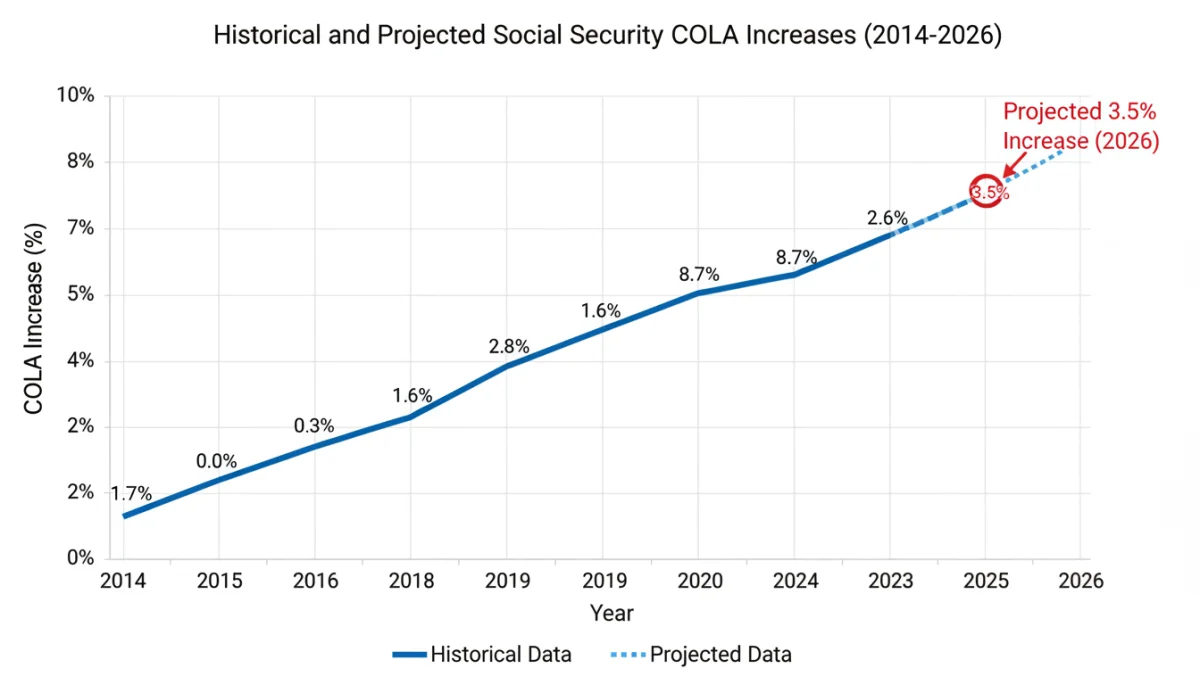
Examining historical COLA trends provides valuable context for the projected 3.5% increase in 2026. Over the past few decades, COLA adjustments have varied significantly, reflecting different economic periods. There have been years with no COLA, and years with substantial increases, particularly during periods of high inflation. These fluctuations underscore the dynamic nature of economic forces impacting retiree benefits.
Understanding these historical patterns helps in anticipating future adjustments. For example, periods of sustained economic growth with moderate inflation often lead to smaller, more predictable COLA increases. Conversely, times of economic volatility or high inflation, as seen in recent years, tend to result in larger adjustments to help beneficiaries cope with rising prices.
Past COLA Adjustments and Their Lessons
Looking back, recent years have seen some notable COLA increases, driven by specific economic factors. The lessons from these periods highlight the importance of the CPI-W as a reliable indicator and the government’s commitment to protecting the purchasing power of Social Security recipients. These trends also inform ongoing debates about the adequacy of the current COLA calculation method.
- Variable Increases: COLA has ranged from 0% to over 8% in different years.
- Economic Indicators: CPI-W remains the most influential factor.
- Policy Debates: Discussions on improving the COLA calculation for better beneficiary outcomes.
The future outlook for COLA is inherently tied to the broader economic environment. While the 3.5% projection for 2026 is a positive sign, beneficiaries should remain informed about economic forecasts and how they might influence future adjustments. Continuous monitoring of inflation and economic growth will be key to understanding subsequent COLA determinations.
Beyond the Numbers: Broader Economic Implications
The anticipated 3.5% 2026 Social Security COLA extends beyond individual retiree benefits, carrying broader economic implications. Such an adjustment can influence consumer spending patterns, contribute to overall economic stability, and even impact federal budget considerations. When millions of beneficiaries receive more disposable income, it can stimulate local economies through increased consumption of goods and services.
Furthermore, the COLA reflects the ongoing state of inflation within the US economy. A significant increase suggests that inflationary pressures are still a concern, which could influence monetary policy decisions by the Federal Reserve. Policymakers closely watch these indicators to gauge the effectiveness of their strategies and to make adjustments as needed to maintain price stability.
Federal Budget and Social Security Trust Funds
The funding of Social Security benefits, including COLA adjustments, comes from dedicated payroll taxes and the Social Security trust funds. A higher COLA means a larger payout from these funds, which can draw attention to the long-term solvency of the Social Security system. While the system is robust, consistent large COLA increases can accelerate the depletion of trust fund reserves, prompting discussions about potential reforms.
- Consumer Spending: Increased benefits can boost retail sales and local economies.
- Monetary Policy: COLA reflects inflation, influencing Federal Reserve decisions.
- Trust Fund Solvency: Higher payouts impact the long-term health of Social Security funds.
The broader economic implications of the 2026 COLA highlight the interconnectedness of Social Security with national economic health. It serves as both a reflection of current economic conditions and a driver of future economic activity, making it a critical aspect of financial policy and public discourse.
Preparing for the 2026 COLA: Advice for Beneficiaries
With the 2026 Social Security COLA projected at 3.5%, beneficiaries have an opportunity to proactively prepare for this increase. While the adjustment is automatic, understanding how to best utilize the additional funds can significantly enhance financial security. This preparation involves reviewing personal budgets, considering potential impacts on taxes, and exploring ways to maximize the benefit.
One of the first steps is to update your financial records and projections. Knowing exactly how much your monthly benefit will increase allows for more precise budgeting. This is particularly important for those who rely heavily on Social Security as their primary income source, as even a small percentage increase can make a meaningful difference in covering daily expenses or unexpected costs.
Practical Steps for Maximizing Your Benefits
Beyond simply receiving the increased amount, beneficiaries should consider the broader implications. For example, for some, a higher income might push them into a different tax bracket, potentially increasing their taxable Social Security benefits. It’s wise to consult with a financial advisor or tax professional to understand these nuances.
- Budget Review: Adjust your monthly budget to reflect the new benefit amount.
- Tax Planning: Consult a professional to understand potential tax implications of increased income.
- Debt Reduction: Consider using additional funds to pay down high-interest debt.
- Emergency Savings: Boost your emergency fund for unexpected expenses.
Preparing for the 2026 COLA is about more than just anticipating a larger check; it’s about strategic financial planning. By taking proactive steps, retirees can ensure they are well-positioned to benefit from the increase and maintain their financial stability in the coming year and beyond.
| Key Point | Brief Description |
|---|---|
| Projected COLA 2026 | Social Security benefits are expected to increase by 3.5% for US retirees. |
| COLA Calculation | Based on the Consumer Price Index for Urban Wage Earners and Clerical Workers (CPI-W). |
| Impact on Retirees | Boosts purchasing power, helps cover rising costs like healthcare and daily expenses. |
| Economic Drivers | Influenced by persistent inflation, energy prices, and housing market trends. |
Frequently Asked Questions About the 2026 COLA
The primary purpose of the Social Security Cost-of-Living Adjustment (COLA) is to protect the purchasing power of beneficiaries. It ensures that fixed incomes from Social Security benefits keep pace with inflation, helping retirees and other recipients maintain their standard of living amidst rising costs for goods and services.
The 2026 COLA percentage is determined by comparing the Consumer Price Index for Urban Wage Earners and Clerical Workers (CPI-W) from the third quarter (July, August, September) of 2025 to the third quarter of 2024. The percentage increase between these periods forms the basis for the COLA.
A 3.5% COLA will result in a noticeable increase in your monthly Social Security benefit. For example, if your current benefit is $1,500, a 3.5% increase would add $52.50 to your monthly check. While seemingly modest, this cumulative increase over a year can provide significant financial relief.
Yes, the 3.5% COLA is a projection based on current economic data and forecasts. The official COLA announcement is typically made in October, after the final third-quarter CPI-W data becomes available. While projections are often accurate, minor adjustments are possible until the official determination.
Medicare Part B premiums are often deducted directly from Social Security benefits. While COLA increases your benefit, higher premiums could offset some of that gain. However, the ‘hold harmless’ provision typically prevents most beneficiaries from seeing their net Social Security benefit decrease due to rising Part B premiums.
Conclusion
The anticipated 3.5% Cost-of-Living Adjustment for Social Security benefits in 2026 represents a crucial development for millions of US retirees. This projected increase, driven by ongoing inflationary pressures, underscores the vital role COLA plays in preserving beneficiaries’ purchasing power. As the economic landscape continues to evolve, staying informed about these adjustments and their broader implications remains paramount for effective financial planning and long-term security.