Optimize Your 2026 HSA/FSA: Save 30% on Healthcare Costs

Maximizing your 2026 HSA and FSA benefits is crucial for significant healthcare savings, potentially reducing your costs by up to 30%.
Are you ready to take control of your healthcare spending and unlock substantial savings? Understanding and effectively utilizing your 2026 HSA/FSA benefits can be a game-changer, potentially slashing your healthcare costs by up to 30%. This isn’t just about minor adjustments; it’s about strategic financial planning that impacts your overall well-being and bottom line.
Understanding HSA and FSA Fundamentals for 2026
As we look towards 2026, the landscape of healthcare benefits continues to evolve, making it more critical than ever to grasp the core differences and advantages of Health Savings Accounts (HSAs) and Flexible Spending Accounts (FSAs). While both offer significant tax advantages for healthcare expenses, their structures and rules cater to different financial situations and health coverage types.
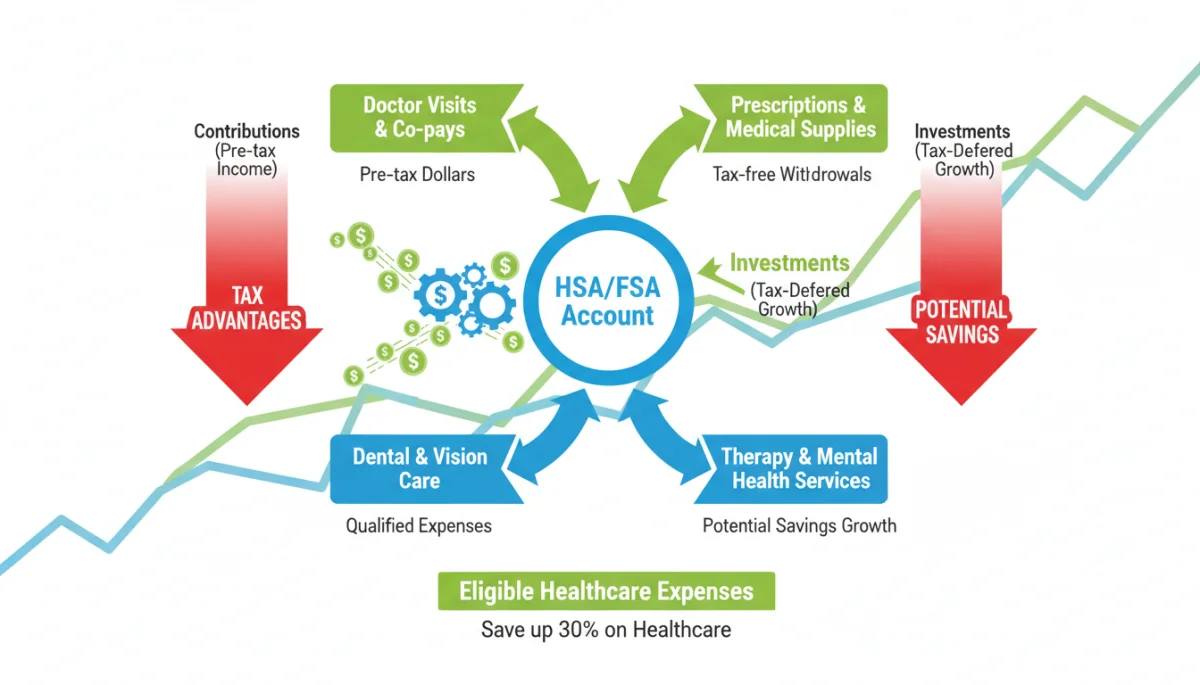
An HSA is a tax-advantaged savings account available to those enrolled in a High-Deductible Health Plan (HDHP). Contributions are tax-deductible, earnings grow tax-free, and withdrawals for qualified medical expenses are also tax-free. This triple-tax advantage makes HSAs a powerful tool for both current healthcare costs and future retirement planning. Conversely, an FSA is typically offered through an employer and can be paired with any health plan. Contributions are pre-tax, reducing your taxable income, but funds generally operate on a “use-it-or-lose-it” basis within the plan year, though some plans offer grace periods or limited rollovers.
Key differences and eligibility
Knowing the specific eligibility criteria for each account in 2026 is the first step toward optimization. HSAs require enrollment in an HDHP, as defined by the IRS, with specific minimum deductibles and maximum out-of-pocket limits. FSAs are more broadly available through employer-sponsored plans, regardless of your health plan type, but you cannot contribute to an FSA if you are also contributing to an HSA, unless it is a Limited Purpose FSA.
- HSA Eligibility: Must be enrolled in a High-Deductible Health Plan (HDHP).
- FSA Eligibility: Available through employer-sponsored plans, regardless of health plan type.
- Contribution Limits: Both accounts have annual contribution limits set by the IRS, which are typically adjusted for inflation each year.
The choice between an HSA and an FSA, or how to best utilize one, depends heavily on your anticipated healthcare needs, your employer’s offerings, and your overall financial strategy. Understanding these fundamentals is the bedrock upon which all other optimization strategies are built, ensuring you leverage the right account for your circumstances.
Maximizing Contributions: Strategies for Higher Savings
One of the most direct ways to amplify your healthcare savings in 2026 is by maximizing your contributions to your HSA or FSA. The IRS sets annual limits, which are usually adjusted for inflation, allowing you to save more pre-tax dollars for eligible medical expenses. For HSAs, contributing the maximum amount not only covers potential out-of-pocket costs but also functions as a powerful, tax-free investment vehicle for future healthcare needs, especially in retirement.
Many individuals underestimate their potential healthcare expenses, leading to under-contributing to these accounts. Reviewing past medical spending, anticipating future needs (e.g., planned procedures, new medications, family expansion), and factoring in potential unforeseen health events can help you project a more accurate contribution target. Remember, HSA funds roll over year after year, so over-contributing isn’t a concern; it’s an investment. FSA funds, however, typically have a use-it-or-lose-it rule, making accurate forecasting essential.
Employer contributions and catch-up provisions
Beyond your personal contributions, investigate if your employer offers any contributions to your HSA or FSA. Many companies provide a certain amount as part of their benefits package, which is essentially free money to help cover your healthcare costs. Be sure to understand the terms and conditions for receiving these employer contributions.
- Employer Match/Contribution: Check if your employer contributes to your HSA or FSA.
- HSA Catch-Up Contributions: If you are aged 55 or older, you can contribute an additional “catch-up” amount to your HSA, further boosting your tax-advantaged savings.
- Strategic Allocation: Prioritize maximizing HSA contributions due to their long-term investment potential.
For those eligible for HSAs, consider the “catch-up” contribution if you are 55 or older. This provision allows you to contribute an additional amount each year, significantly increasing your tax-free savings for healthcare expenses in later life. By strategically maximizing all available contribution avenues, you effectively reduce your taxable income and build a robust fund for your health-related expenditures.
Strategic Spending: Eligible Expenses and Smart Purchases
Optimizing your 2026 HSA/FSA benefits isn’t just about how much you contribute; it’s also about how wisely you spend those funds. Understanding the full spectrum of eligible expenses is crucial to ensure you’re leveraging every dollar without incurring penalties. The IRS provides comprehensive guidelines on what constitutes a qualified medical expense, which can range from doctor’s visits and prescriptions to dental care, vision care, and even certain over-the-counter medications and medical devices.
Beyond the obvious, many often overlook less common but equally eligible expenses. This includes things like acupuncture, chiropractic care, smoking cessation programs, weight-loss programs (if prescribed for a specific medical condition), and even mileage driven for medical appointments. Keeping meticulous records of all your medical receipts and understanding your plan’s specific rules for reimbursement or direct payment is vital for seamless utilization.
Leveraging eligible purchases for maximum benefit
To truly optimize, consider proactive purchases. If you anticipate needing new glasses, contact lenses, or dental work, planning these expenditures within your benefit year for an FSA can prevent forfeiture of funds. For HSAs, the flexibility of rolling over funds means you can save for larger, future medical expenses, such as potential surgeries or long-term care needs, allowing your money to grow tax-free.
- Review IRS Publication 502: This document provides a detailed list of eligible medical expenses.
- Over-the-Counter (OTC) Items: Many OTC medications, previously requiring a prescription, are now eligible without one.
- Dependent Care: Some FSAs (Dependent Care FSAs) also cover childcare expenses, which can be a significant saving for families.
Furthermore, consider using your HSA or FSA debit card for direct payments whenever possible. This simplifies the process and reduces the need for extensive reimbursement claims. Regularly checking your account balance and tracking your spending throughout the year will help you stay on budget and make the most of your available funds. Strategic spending transforms these benefits from mere accounts into powerful financial tools.
The Investment Power of HSAs: Beyond Healthcare
While FSAs are primarily spending accounts for current healthcare needs, HSAs offer a unique dual advantage: they serve as both a healthcare expense vehicle and a powerful retirement savings tool. This often-underestimated aspect of HSAs provides a significant opportunity for long-term financial growth, making them a cornerstone of savvy financial planning for 2026 and beyond.
Unlike FSAs, HSA funds that are not used for medical expenses roll over year after year and can be invested. This allows your contributions to grow tax-free, creating a substantial nest egg. When you reach retirement age (typically 65), you can withdraw HSA funds for any purpose without penalty, though non-medical withdrawals will be subject to income tax. This flexibility makes HSAs akin to an additional 401(k) or IRA, but with the added benefit of tax-free withdrawals for qualified medical expenses at any age.
Strategic investment choices and long-term planning
For those with an HSA, exploring the investment options offered by your custodian is crucial. Many HSA providers offer a range of investment choices, from mutual funds to exchange-traded funds (ETFs), allowing you to tailor your investment strategy to your risk tolerance and financial goals. The earlier you start investing your HSA funds, the more time they have to compound and grow.
- Invest Unused Funds: Treat your HSA as a long-term investment vehicle, not just a spending account.
- Diversify Investments: Choose investment options within your HSA that align with your overall financial portfolio.
- Save Receipts: Pay for current medical expenses out-of-pocket and save receipts. Reimburse yourself years later when funds have grown.
A particularly astute strategy is to pay for current medical expenses out-of-pocket, if financially feasible, and save your medical receipts. This allows your HSA funds to continue growing through investments. Later, in retirement or when needed, you can reimburse yourself tax-free for those past expenses, effectively creating a tax-free income stream. This approach maximizes the investment potential of your HSA, turning it into a significant asset for your financial future.
Navigating Rollovers, Grace Periods, and “Use-It-or-Lose-It” Rules
The differences in how unused funds are handled between HSAs and FSAs are critical for effective planning. HSAs are inherently flexible, with all unused funds rolling over from year to year, accruing interest or investment gains. This feature is a major advantage, eliminating the pressure to spend down balances by a specific deadline.
FSAs, however, traditionally operate under a “use-it-or-lose-it” rule. This means any funds not spent by the end of the plan year (or a short grace period) are forfeited. For 2026, it’s essential to understand your employer’s specific FSA policy. Many employers now offer either a grace period (allowing you an extra 2.5 months to use funds from the previous year) or a limited rollover amount (allowing a certain amount, typically up to $610 for 2023, adjusted annually, to roll over to the next year).
Avoiding forfeiture with proactive planning
To avoid losing FSA funds, proactive planning is key. Towards the end of the plan year, review your balance and plan any eligible expenditures. This might include scheduling annual physicals, dental cleanings, eye exams, or purchasing necessary medical supplies, over-the-counter medications, or even a new pair of prescription glasses or contacts. Don’t wait until the last minute, as appointments can be hard to secure.
- Understand Your FSA Policy: Confirm if your plan offers a grace period or limited rollover for 2026.
- Year-End Spending Spree: Plan to use remaining FSA funds on eligible expenses before the deadline.
- HSA Rollover Advantage: Appreciate that HSA funds always roll over, simplifying long-term planning.
For those with both an HSA and a Limited Purpose FSA (which only covers vision and dental expenses, allowing simultaneous HSA contributions), the strategy involves prioritizing HSA contributions for general medical savings and using the LPFSA for specific vision and dental needs. By carefully tracking balances and understanding the nuances of rollover and grace period rules, you can ensure every dollar in your HSA or FSA is utilized to your maximum benefit, preventing unnecessary forfeiture and maximizing your 2026 healthcare savings.
Future-Proofing Your Health: Long-Term HSA/FSA Strategies
Looking beyond immediate healthcare needs, a crucial aspect of optimizing your 2026 HSA/FSA benefits involves integrating them into your long-term financial strategy. This foresight can lead to significant savings and financial security, especially as healthcare costs continue to rise and retirement approaches. The goal is not just to cover current expenses but to build a robust financial buffer for future medical needs.
For HSAs, the long-term investment potential is unparalleled. By consistently contributing the maximum allowable amount, investing the funds, and ideally paying for current medical expenses out-of-pocket (if affordable), you can accumulate a substantial, tax-free sum. This fund can then serve as a dedicated source for healthcare expenses in retirement, protecting your other retirement savings from being depleted by medical bills, which are often a major concern for retirees.
Integrating with retirement and estate planning
Your HSA can seamlessly integrate with your broader retirement and estate planning. In retirement, HSA funds can be used tax-free for qualified medical expenses, including Medicare premiums, long-term care insurance premiums, and out-of-pocket costs. This provides a significant advantage over traditional retirement accounts, where withdrawals for medical expenses would typically be taxed.
- Retirement Healthcare Fund: Position your HSA as a primary source for retirement medical expenses.
- Estate Planning: Understand beneficiary rules for HSAs to ensure smooth transfer of assets.
- Annual Review: Re-evaluate your contributions and investment strategy annually to align with changing health and financial goals.
In the event of your passing, an HSA can be passed to a spouse tax-free, who can then use it as their own HSA. If passed to a non-spouse beneficiary, it becomes taxable income. Understanding these implications is vital for comprehensive estate planning. Regularly reviewing your HSA strategy, adjusting contributions based on anticipated future health needs, and staying informed about IRS regulations will ensure your HSA remains a powerful tool for future-proofing your health and wealth for decades to come.
| Key Point | Brief Description |
|---|---|
| Maximize Contributions | Contribute the maximum allowable to HSAs/FSAs, including employer contributions and HSA catch-up amounts. |
| Strategic Spending | Understand eligible expenses and plan purchases to fully utilize funds, especially for FSAs to avoid forfeiture. |
| HSA Investment Power | Invest unused HSA funds for tax-free growth, using it as a retirement savings vehicle for future healthcare costs. |
| Avoid FSA Forfeiture | Be aware of “use-it-or-lose-it” rules; utilize grace periods or rollovers to spend down FSA balances. |
Frequently Asked Questions About 2026 HSA/FSA Optimization
The IRS typically adjusts HSA and FSA contribution limits annually for inflation. While specific 2026 numbers will be released closer to the year, they generally see a slight increase from the previous year. It’s crucial to check the official IRS guidelines or consult your benefits administrator for the most accurate and up-to-date figures.
Generally, no, you cannot contribute to both a standard HSA and a standard FSA simultaneously. However, you can have an HSA alongside a Limited Purpose FSA (LPFSA), which covers only vision and dental expenses. This allows you to still contribute to your HSA for general medical savings while utilizing the LPFSA for specific costs.
HSA funds are portable, meaning they belong to you, not your employer. If you change jobs, your HSA account and its funds remain yours. You can continue to use them for eligible expenses, transfer them to a new HSA provider, or continue investing them. This portability is a significant advantage of HSAs.
To avoid forfeiture of FSA funds, proactively plan your eligible expenses. Check your employer’s policy for grace periods or limited rollovers. Schedule medical appointments, purchase prescription medications, eyeglasses, contacts, or other eligible over-the-counter items before the plan year’s deadline. Keep track of your balance throughout the year.
Yes, under current regulations, many over-the-counter (OTC) medications and products are eligible for reimbursement from both HSAs and FSAs without requiring a doctor’s prescription. This includes items like pain relievers, cold medicines, allergy medications, and menstrual products. Always verify specific eligibility with your plan administrator or IRS guidelines.
Conclusion
Optimizing your 2026 HSA and FSA benefits is more than just a financial task; it’s a strategic move towards greater financial security and healthcare affordability. By understanding the nuances of each account, maximizing your contributions, spending wisely on eligible expenses, and leveraging the investment power of HSAs, you can significantly reduce your healthcare costs, potentially by up to 30%. Taking proactive steps now to plan and manage these benefits will ensure you are well-prepared for both expected and unexpected health expenses, securing your financial well-being for the years to come.