Disability Benefits 2026: Your Guide to SSDI Application
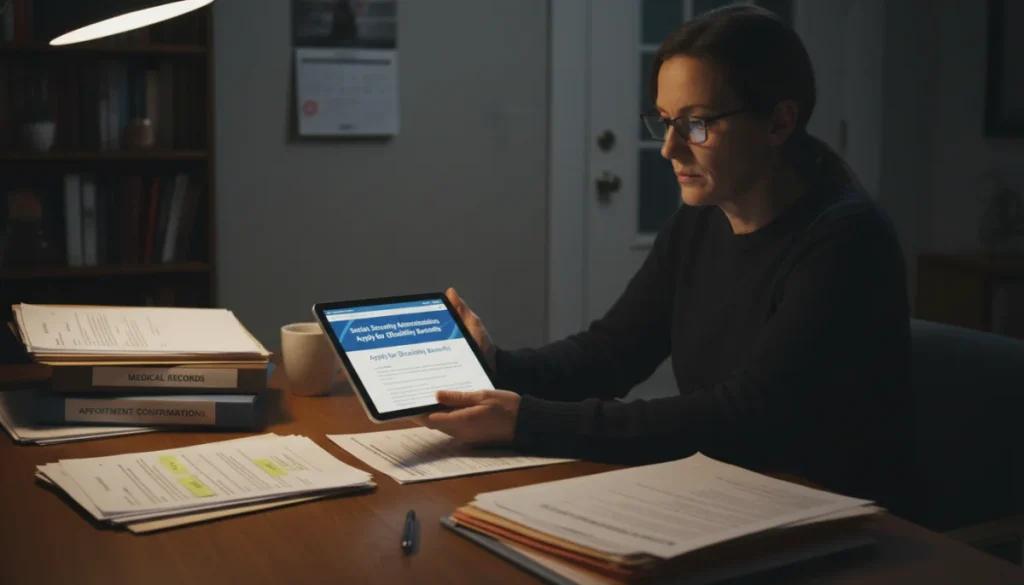
Applying for Social Security Disability Insurance (SSDI) in 2026 requires understanding specific eligibility criteria, gathering comprehensive documentation, and navigating a multi-stage process to secure vital financial assistance.
Navigating the complex landscape of disability benefits can be daunting, especially when facing health challenges. This comprehensive guide aims to demystify the process of applying for Social Security Disability Insurance (SSDI) in 2026, offering a clear, step-by-step approach to help you secure the support you need.
Understanding Social Security Disability Insurance (SSDI)
Social Security Disability Insurance (SSDI) is a federal insurance program funded by payroll taxes. It provides benefits to individuals who have worked long enough and recently enough, and have paid Social Security taxes, but are now unable to work due to a severe medical condition. Unlike Supplemental Security Income (SSI), which is needs-based, SSDI is an entitlement program based on your work history.
In 2026, the fundamental principles of SSDI remain consistent: it’s about providing a financial safety net for those who have contributed to the system and now find themselves unable to maintain substantial gainful activity due to a disability. Understanding this distinction is the first critical step before beginning any application process.
Who is Eligible for SSDI?
Eligibility for SSDI hinges on two primary factors: your medical condition and your work history. The Social Security Administration (SSA) defines disability as the inability to engage in any substantial gainful activity (SGA) due to a medically determinable physical or mental impairment that is expected to last for a continuous period of at least 12 months or result in death.
- Work Credits: You must have accumulated a certain number of work credits, earned through your employment and payment of Social Security taxes. The number of credits needed depends on your age when your disability began.
- Severity of Condition: Your medical condition must meet the SSA’s strict definition of disability, meaning it prevents you from doing work you did before and adjusting to other work.
- Duration of Disability: The impairment must be expected to last for at least one year or result in death.
Meeting these criteria is paramount. Without a sufficient work history and a severe, long-term disabling condition, your application for SSDI will likely be denied. It’s crucial to gather all relevant information about your work history and medical condition before proceeding.
The SSDI program is designed to support individuals who have contributed to the system throughout their working lives. As such, understanding your work credit status is a foundational element of determining your potential eligibility. The SSA provides tools to check your work history and estimated benefits, which should be utilized early in your planning.
Gathering Essential Documentation for Your 2026 Application
A successful SSDI application in 2026 relies heavily on thorough and accurate documentation. The more comprehensive and organized your submission, the smoother the process tends to be. This stage demands meticulous attention to detail and patience, as collecting all necessary records can take time.
Before you even begin filling out forms, compile a robust file of personal, medical, and work-related documents. This proactive approach not only streamlines the application but also strengthens your case by providing the SSA with a complete picture of your situation.
Key Documents to Collect
The SSA requires a wide array of information to evaluate your claim. Having these documents ready from the outset can prevent delays and requests for additional information.
- Personal Information: Includes your Social Security number, birth certificate, and proof of U.S. citizenship or lawful alien status. If applying for family members, their personal details are also needed.
- Medical Records: This is arguably the most critical component. Gather all treatment records, including doctor’s notes, hospital stays, lab results, imaging scans (X-rays, MRIs, CT scans), and prescription lists. Ensure these records detail the onset, diagnosis, treatment, and prognosis of your disabling condition.
- Work History Information: Provide details about your employment over the past 15 years, including employer names, dates of employment, job duties, and earnings. Your last year’s W-2 form or a self-employment tax return is also important.
- Financial Information: Include details of any other disability benefits you are receiving, such as workers’ compensation or private disability insurance.
Organizing these documents systematically will be a significant advantage. Consider creating a checklist and tracking your progress as you collect each item. Incomplete documentation is a leading cause of application delays and denials. The SSA needs objective medical evidence to support your claim of disability, so detailed medical records are paramount.

Beyond simply collecting, it’s vital to ensure your medical records paint a clear and consistent picture of your disability’s impact on your daily life and ability to work. If there are gaps in your treatment history, be prepared to explain them. Preparing your documentation diligently at this stage will save considerable effort and potential frustration later in the application journey.
Initiating Your Application: Online, Phone, or In-Person
Once your documentation is in order, the next step is to actually begin the application process for SSDI in 2026. The Social Security Administration offers several convenient methods for initiating your claim, allowing you to choose the option that best suits your comfort level and accessibility needs.
Regardless of the method you choose, the information required will be largely the same, drawing from the comprehensive documentation you’ve already gathered. It’s essential to be prepared to provide detailed and accurate responses to all questions posed by the SSA.
Application Submission Methods
The SSA strives to make the application process as accessible as possible, providing multiple avenues for submission.
- Online Application: For many, applying online at the official SSA website (www.ssa.gov) is the most convenient option. The online portal allows you to complete the application at your own pace, save your progress, and return to it later. It’s available 24/7, offering flexibility.
- Phone Application: You can call the SSA’s toll-free number to apply over the phone. A representative will guide you through the application questions. This option can be helpful if you prefer direct interaction or have specific questions during the process.
- In-Person Application: Visiting your local Social Security office allows you to apply with the assistance of an SSA representative. This can be beneficial if you require personalized help or have complex questions that are better addressed face-to-face. It’s advisable to call ahead and schedule an appointment.
Each method has its advantages. The online application provides a digital record and the ability to upload documents directly. Phone applications offer verbal guidance, while in-person visits provide direct support. Choose the method you feel most comfortable with, but always ensure you retain copies of everything you submit.
After submission, you will receive confirmation from the SSA. This marks the beginning of the review process, which can be lengthy. It’s important to keep all correspondence from the SSA and respond promptly to any requests for additional information. Your diligence in this initial phase sets the stage for the subsequent evaluation of your claim.
The Disability Determination Process in 2026
After you submit your SSDI application, it enters the critical disability determination process. This multi-stage review is conducted by Disability Determination Services (DDS), a state agency that works in cooperation with the Social Security Administration. Their role is to assess whether your medical condition meets the SSA’s definition of disability.
This phase is often the longest and most scrutinized part of the application. Understanding how DDS evaluates your claim can help you better prepare for what’s to come and respond effectively to their inquiries.
How DDS Evaluates Your Claim
DDS follows a strict five-step sequential evaluation process to determine if you are disabled:
- Are you engaging in Substantial Gainful Activity (SGA)? If you are working and your earnings exceed the SGA limit for 2026, you will generally not be considered disabled.
- Is your condition severe? Your impairment must significantly limit your ability to perform basic work activities.
- Is your condition on the List of Impairments (Listing of Impairments)? The SSA maintains a list of medical conditions that are considered severe enough to prevent an individual from performing any gainful activity. If your condition meets or equals a listing, you are generally approved.
- Can you do the work you did previously? If your condition does not meet a listing, DDS will assess if your impairment prevents you from performing any past relevant work.
- Can you do any other type of work? If you cannot do your past work, DDS considers your age, education, past work experience, and transferable skills to determine if you can adjust to other types of work.
During this evaluation, DDS will typically contact your doctors and other medical sources for additional information. They may also send you to a consultative examination (CE) with an independent doctor, paid for by the SSA, if there isn’t enough medical evidence in your file to make a decision.
It is crucial to cooperate fully with DDS during this phase. Respond promptly to all requests, attend any scheduled appointments, and ensure your medical providers are aware of your application and can provide comprehensive records. The DDS decision is based solely on the medical evidence and vocational factors, making thorough documentation indispensable.
The disability determination process can be emotionally and physically taxing. Maintaining open communication with DDS and your medical team, and diligently tracking all submitted information, will be key to navigating this complex stage successfully.
Potential Outcomes and What to Do Next
Once the Disability Determination Services (DDS) completes its review, you will receive a decision letter from the Social Security Administration. The outcome will either be an approval or a denial of your SSDI application. Understanding these potential outcomes and the steps to take afterward is crucial for all applicants in 2026.
Regardless of the initial decision, it’s important to remember that the process doesn’t necessarily end there. Many applicants are initially denied, but successfully appeal the decision. Persistence and informed action are key.
If Your Application is Approved
An approval means the SSA agrees that your medical condition meets their definition of disability and you are eligible for benefits. Your decision letter will include important information, such as:
- The date your disability began (Established Onset Date – EOD).
- The amount of your monthly benefit payment.
- When your benefits will start. There is typically a five-month waiting period before cash benefits can begin.
- Information about Medicare eligibility, which usually begins 24 months after your entitlement to disability benefits starts.
Upon approval, it’s important to keep accurate records of your payments and any changes in your medical condition or work status. The SSA may conduct periodic reviews (Continuing Disability Reviews – CDRs) to ensure you still meet the medical requirements for disability. It is recommended to save all correspondence from the SSA.
If Your Application is Denied
If your application is denied, don’t be discouraged. A significant percentage of initial applications are denied, but many are approved through the appeals process. You have the right to appeal the decision, and there are several levels of appeal:
- Reconsideration: This is the first level of appeal. Your file will be reviewed by a different DDS examiner and medical consultant who were not involved in the original decision.
- Hearing by an Administrative Law Judge (ALJ): If reconsideration is denied, you can request a hearing before an ALJ. This is often where applicants have the best chance of success, as you can present new evidence and have a legal representative argue your case.
- Appeals Council Review: If the ALJ denies your claim, you can request a review by the SSA’s Appeals Council.
- Federal Court Review: The final level of appeal is to file a lawsuit in federal district court.
Each level of appeal has strict deadlines, so it’s vital to act quickly if you receive a denial. Seeking assistance from a qualified disability attorney or advocate at the reconsideration or ALJ hearing stage can significantly improve your chances of success. These professionals understand the nuances of disability law and can help gather evidence, prepare you for hearings, and present a compelling case.
Appealing a Denied SSDI Claim in 2026
Receiving a denial for your SSDI application can be disheartening, but it is a common outcome and not the end of the road. Many successful claimants ultimately receive benefits after navigating the appeals process. Understanding the stages of appeal and how to effectively present your case is vital for anyone facing a denial in 2026.
The appeals process is designed to allow you to challenge the SSA’s initial decision. It provides opportunities to submit new evidence, clarify existing information, and present your case before different levels of review.
Steps in the Appeals Process
The Social Security Administration has a multi-tiered appeals process, each with specific procedures and timelines:
- Reconsideration: This is the first step. You must request a reconsideration within 60 days of receiving your denial letter. A new claims examiner, who was not involved in the initial decision, will review your entire file, including any new medical evidence you submit.
- Hearing by an Administrative Law Judge (ALJ): If your reconsideration is denied, you can request a hearing before an ALJ. This hearing is your opportunity to testify about your disability and have witnesses speak on your behalf. An attorney or advocate can be particularly helpful at this stage.
- Appeals Council Review: If the ALJ denies your claim, you can ask the Appeals Council to review the ALJ’s decision. The Appeals Council looks for legal errors or procedural issues in the ALJ’s decision.
- Federal Court Review: As a last resort, if the Appeals Council denies your request for review or upholds the ALJ’s decision, you can file a lawsuit in a federal district court.
Throughout the appeals process, submitting new and updated medical evidence is paramount. This includes recent doctor’s notes, specialist reports, updated lab results, and any other documentation that further illustrates the severity and persistence of your disabling condition. The more current and detailed the medical evidence, the stronger your appeal.
Many individuals find retaining legal representation to be invaluable during the appeals process, especially at the ALJ hearing stage. Disability attorneys or advocates specialize in this area of law and can help you gather evidence, prepare your testimony, cross-examine medical experts, and present a compelling legal argument on your behalf. Their expertise can significantly increase your chances of a favorable outcome.
Timeliness is critical at every stage of the appeal. Missing a deadline can result in the permanent closure of your claim, forcing you to start the entire application process over. Always keep copies of everything you submit and maintain a detailed log of your interactions with the SSA.
Managing Your SSDI Benefits and Responsibilities in 2026
Once you are approved for Social Security Disability Insurance (SSDI) benefits in 2026, it’s important to understand that your responsibilities to the Social Security Administration (SSA) do not end. There are ongoing requirements and considerations to ensure you continue to receive your benefits without interruption and comply with program rules.
Managing your benefits effectively means staying informed about reporting requirements, understanding potential work incentives, and being prepared for periodic reviews of your disability status.
Ongoing Responsibilities and Considerations
- Reporting Changes: You must report any changes that could affect your eligibility or benefit amount. This includes changes in your medical condition (especially if it improves), returning to work, changes in marital status, or changes in dependents. Failing to report these changes can lead to overpayments that you may be required to repay.
- Continuing Disability Reviews (CDRs): The SSA periodically reviews your case to determine if you are still disabled. The frequency of these reviews depends on the nature of your disability; some conditions are expected to improve, while others are permanent. During a CDR, the SSA will request updated medical information to assess your current condition and ability to work.
- Work Incentives: The SSA offers various work incentives to encourage beneficiaries to return to work if they are able. These include the Trial Work Period (TWP) and Extended Period of Eligibility (EPE), which allow you to test your ability to work while still receiving benefits. Understanding these programs can help you transition back into employment without immediately losing your benefits.
- Medicare Enrollment: After receiving SSDI benefits for 24 months, most beneficiaries become eligible for Medicare. It’s important to understand your enrollment options and deadlines to ensure you have continuous health coverage.
Staying organized and communicating proactively with the SSA are key to effective benefit management. Keep all records of your medical treatments, earnings, and communications with the SSA. If you have questions about reporting requirements or work incentives, contact the SSA directly or consult with a qualified professional.
The goal of SSDI is to provide essential support when you are unable to work. By understanding your ongoing responsibilities and utilizing available resources, you can ensure the continuous and proper receipt of your benefits, allowing you to focus on your health and well-being.
Resources and Support for SSDI Applicants in 2026
The journey of applying for Social Security Disability Insurance (SSDI) can be complex and emotionally taxing. Fortunately, a wealth of resources and support systems are available to assist applicants in 2026, offering guidance, information, and advocacy throughout the process.
Knowing where to turn for help can significantly alleviate stress and improve your chances of a successful application or appeal. These resources range from government agencies to non-profit organizations and legal professionals.
Where to Find Help and Information
Navigating the intricacies of SSDI is often easier with the right support. Consider these valuable resources:
- Social Security Administration (SSA): The official source for all SSDI information. Their website (www.ssa.gov) offers detailed guides, forms, and online application portals. You can also contact them by phone or visit a local office for direct assistance.
- Disability Attorneys and Advocates: Legal professionals specializing in disability law can provide invaluable assistance, especially during the appeals process. They can help gather evidence, prepare your case, represent you at hearings, and navigate legal complexities. Many work on a contingency basis, meaning they only get paid if you win your case.
- Non-Profit Organizations: Various national and local organizations offer support to individuals with disabilities. These groups often provide free information, counseling, and referrals to other services. Examples include the National Disability Rights Network and disease-specific foundations.
- Medical Professionals: Your doctors, specialists, and other healthcare providers are crucial. They provide the medical evidence needed to support your claim and can often offer insights into managing your condition and its impact on your ability to work.
When seeking assistance, always verify the credentials and reputation of any professional or organization. Look for attorneys or advocates with experience in Social Security disability cases. Non-profit organizations should have clear missions and positive community feedback.
Utilizing these resources can provide not only practical assistance but also emotional support during a challenging time. Connecting with others who have gone through similar experiences, or receiving guidance from experienced professionals, can make a significant difference in your journey toward securing SSDI benefits. Remember, you don’t have to navigate this process alone.
| Key Aspect | Brief Description |
|---|---|
| Eligibility Criteria | Requires sufficient work credits and a severe medical condition preventing substantial gainful activity for at least 12 months. |
| Documentation | Gather comprehensive medical records, work history, and personal identification to support your claim effectively. |
| Application Process | Apply online, by phone, or in person. Be prepared for a multi-stage review by Disability Determination Services (DDS). |
| Appeals | If denied, utilize the reconsideration, ALJ hearing, Appeals Council, and Federal Court review stages; consider legal aid. |
Frequently Asked Questions About SSDI in 2026
SSDI (Social Security Disability Insurance) is an insurance program based on your work history and contributions to Social Security taxes. SSI (Supplemental Security Income) is a needs-based program for individuals with limited income and resources, regardless of work history. Both require meeting the SSA’s definition of disability.
The initial application process can take several months, often 3 to 5 months, for a decision. If an appeal is necessary, especially through multiple levels, the entire process can extend to a year or even longer. Timely submission of documentation can help expedite the review.
You can work while applying, but your earnings must not exceed the Substantial Gainful Activity (SGA) limit for 2026. If your earnings are above this limit, the SSA will generally consider you not disabled. It’s crucial to report all work activity to the SSA.
You are required to report any significant improvement in your medical condition to the SSA. Your case will be subject to periodic Continuing Disability Reviews (CDRs) to determine if you still meet the medical criteria for disability. Work incentives are available if you attempt to return to work.
While not mandatory, legal representation, especially from a disability attorney or advocate, can significantly improve your chances of success, particularly during the appeals stages. They can help gather evidence, prepare your testimony, and present a stronger case to the SSA.
Conclusion
Applying for Social Security Disability Insurance (SSDI) in 2026 is a significant undertaking that requires careful preparation, diligent documentation, and a clear understanding of the process. From establishing initial eligibility based on work credits and medical severity to navigating the detailed disability determination and potential appeals, each step demands attention. While the journey can be challenging, leveraging available resources, such as legal counsel and non-profit support, can greatly enhance your prospects of securing the benefits you deserve. Remaining persistent and informed throughout your application will be key to obtaining the financial stability provided by SSDI.