2026 Fed Rate Hikes: 3-Month Investment Impact Analysis
Understanding the potential impact of 2026 Federal Reserve interest rate hikes is crucial for optimizing your investment strategies over the next three months.
As we look ahead, the prospect of Navigating the 2026 Federal Reserve Interest Rate Hikes: A 3-Month Financial Impact Analysis for Your Investments becomes a central concern for every savvy investor. This article will explore the anticipated shifts and provide a concise, actionable analysis to help you prepare for the economic landscape ahead.
Understanding the Federal Reserve’s Mandate and Rate Decisions
The Federal Reserve, often simply called the Fed, plays a pivotal role in the United States economy. Its dual mandate involves maximizing employment and maintaining stable prices, which directly influences its decisions on interest rates. These decisions are not made in a vacuum; they are a response to various economic indicators, inflation pressures, and global financial conditions.
By raising or lowering the federal funds rate, the Fed influences borrowing costs across the economy, impacting everything from mortgages and car loans to corporate debt and consumer spending. Anticipating these moves, especially for 2026, requires a keen understanding of current economic trends and the Fed’s historical responses to similar situations. The market often reacts to signals long before official announcements, making proactive analysis essential for investors.
Key Economic Indicators Influencing Fed Policy
- Inflation Data: The Consumer Price Index (CPI) and Personal Consumption Expenditures (PCE) are closely watched. Persistent inflation above the Fed’s 2% target often signals a need for rate hikes.
- Employment Reports: Unemployment rates, job creation figures, and wage growth are critical. A robust labor market might give the Fed more room to tighten monetary policy without fear of stifling economic growth.
- GDP Growth: Gross Domestic Product figures indicate the overall health and expansion of the economy. Strong growth can accommodate higher interest rates, while slowing growth might necessitate a more cautious approach.
The Fed’s communication is also a powerful tool. Statements from the Federal Open Market Committee (FOMC) and speeches by the Fed Chair are scrutinized for clues about future policy direction. Investors must pay close attention to this forward guidance to adjust their portfolios accordingly. Predicting the exact timing and magnitude of 2026 Fed rate hikes involves analyzing these complex factors.
Ultimately, understanding the Fed’s mandate and the economic data it considers is the first step in preparing for any future interest rate adjustments. These insights allow investors to anticipate potential shifts and position their assets strategically, mitigating risks and identifying opportunities within the evolving financial landscape.
Immediate Impact on Fixed-Income Investments
Fixed-income investments, such as bonds, are particularly sensitive to changes in interest rates. When the Federal Reserve raises rates, newly issued bonds typically offer higher yields, making existing bonds with lower yields less attractive. This often leads to a decrease in the market value of older bonds. For investors holding these instruments, understanding this inverse relationship is paramount.
The 3-month horizon for 2026 Fed rate hikes implies that any adjustments in your fixed-income portfolio should be considered with a short-to-medium term perspective. Short-duration bonds tend to be less affected by rising rates compared to long-duration bonds, as their principal is returned sooner, allowing for reinvestment at higher prevailing rates. This makes them a potentially safer bet in a rising rate environment.
Strategies for Bondholders in a Rising Rate Environment
- Shorten Duration: Consider shifting investments from long-term bonds to short-term bonds or bond funds. This minimizes exposure to interest rate risk.
- Laddering Strategy: Invest in bonds with staggered maturity dates. As shorter-term bonds mature, you can reinvest the principal into new bonds offering higher rates.
- Inflation-Protected Securities (TIPS): These bonds adjust their principal value based on inflation, offering some protection against purchasing power erosion during inflationary periods that often precede rate hikes.
Conversely, some fixed-income assets, like floating-rate notes, might perform better as their interest payments adjust upward with market rates. However, these often come with their own set of risks, including credit risk. Diversification within the fixed-income segment remains crucial, balancing risk and return potential.
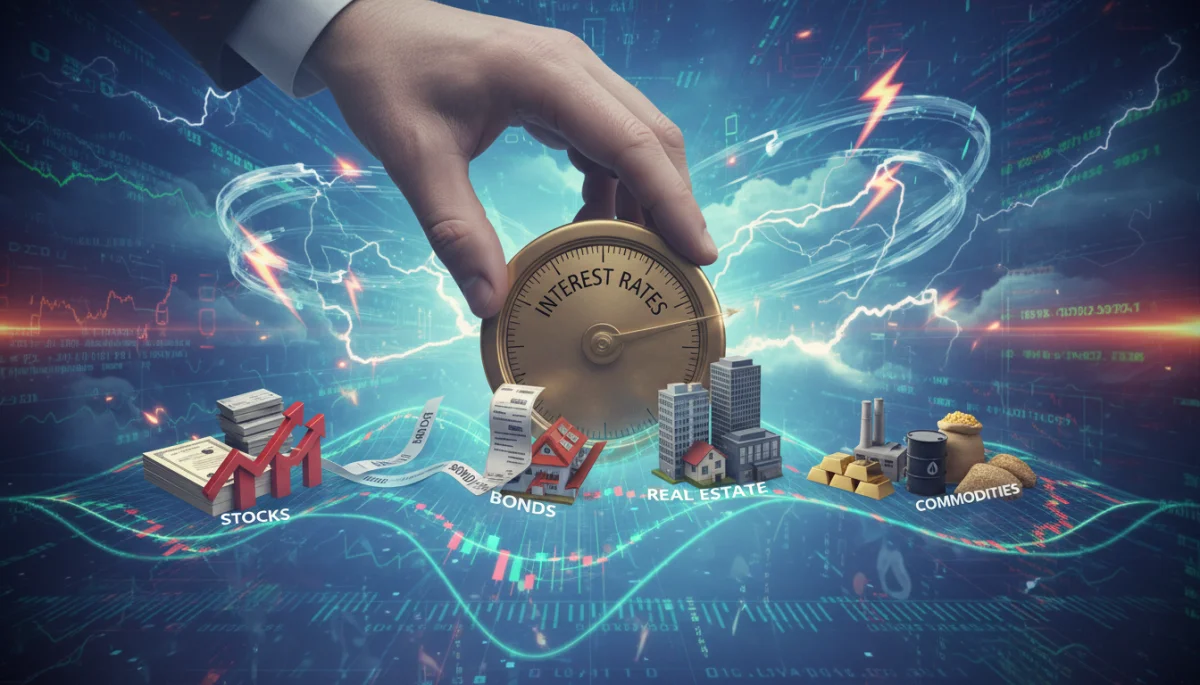
The immediate impact on fixed-income investments can be significant, especially for those with substantial holdings in long-duration debt. A proactive approach, focusing on duration management and diversification, can help mitigate potential losses and even uncover opportunities to enhance portfolio yield as rates climb.
Equities Market Volatility and Sector Performance
The stock market’s reaction to Federal Reserve interest rate hikes is complex and often characterized by increased volatility. While higher rates can signal a strengthening economy, they also raise borrowing costs for companies, potentially compressing profit margins and slowing growth. This dual effect means investors must look beyond headline market movements and analyze sector-specific impacts.
Historically, certain sectors tend to perform better or worse during periods of rising interest rates. Growth stocks, which often rely on future earnings and debt-fueled expansion, can be particularly vulnerable as their discounted future cash flows are worth less in a higher-rate environment. Conversely, value stocks, often mature companies with stable cash flows, might show greater resilience.
Sectors to Watch During Rate Hikes
- Financials: Banks and other financial institutions often benefit from higher rates, as their net interest margins (the difference between what they pay on deposits and earn on loans) typically expand.
- Utilities and Consumer Staples: These defensive sectors tend to be less sensitive to economic cycles and can offer stability during volatile periods, though their growth potential may be limited.
- Technology and High-Growth: Companies in these sectors, particularly those with high debt loads or whose valuations are heavily reliant on distant future earnings, may face headwinds as borrowing costs increase and discount rates rise.
The 3-month outlook for 2026 Fed rate hikes suggests a period where market participants will be highly sensitive to economic data and Fed commentary. Companies with strong balance sheets, low debt, and robust free cash flow are generally better positioned to weather rising borrowing costs. Investors should re-evaluate their equity holdings, focusing on fundamentals and sector exposure.
In conclusion, while rising interest rates can introduce turbulence to the equities market, a nuanced approach focusing on sector analysis, company fundamentals, and a balance between growth and value can help investors navigate the potential volatility effectively. Diversification across different market segments also remains a cornerstone of a resilient investment strategy.
Real Estate and Mortgage Market Dynamics in 2026
The real estate sector is profoundly influenced by interest rate changes, primarily through their effect on mortgage rates. As the Federal Reserve signals or implements 2026 Fed rate hikes, mortgage rates typically follow suit, making borrowing more expensive for homebuyers. This can cool demand, impacting home prices and sales volumes across the residential and commercial markets.
For homeowners with adjustable-rate mortgages (ARMs), rising rates mean higher monthly payments, potentially straining household budgets. Those considering refinancing or new home purchases will face higher borrowing costs, which could lead to a reassessment of affordability. The 3-month analysis suggests that potential buyers might accelerate or defer their plans based on the perceived trajectory of rates.
Impact on Real Estate Investment Strategies
- Residential Market: Higher mortgage rates can reduce buyer affordability, potentially leading to a slowdown in price appreciation or even modest declines in some markets. Investors in rental properties might see increased demand as homeownership becomes less accessible.
- Commercial Real Estate: Financing for commercial properties becomes more expensive, affecting development projects and property valuations. The return on investment for new acquisitions may diminish, prompting a re-evaluation of investment criteria.
- REITs (Real Estate Investment Trusts): REITs can be a mixed bag. Those with strong balance sheets and properties in high-demand sectors might perform well, but those with high debt or exposure to struggling sectors could face challenges.
Investors in real estate should consider the leverage used in their portfolios. Properties with high debt-to-equity ratios are more vulnerable to rising interest expenses. Furthermore, the overall economic health, including job growth and population shifts, will continue to play a significant role in real estate market performance, even amidst rising rates.
In summary, the real estate and mortgage markets are set for dynamic shifts with anticipated 2026 Fed rate hikes. A thorough understanding of these dynamics, coupled with strategic planning for financing and property selection, will be critical for navigating this environment successfully. Diversification, even within real estate, and a focus on cash-flowing assets can provide stability.
Alternative Investments and Diversification Strategies
In an environment of rising interest rates, traditional asset classes like stocks and bonds can face headwinds. This makes alternative investments increasingly attractive for diversification and potential risk mitigation. While not without their own risks, alternatives can offer uncorrelated returns, providing a buffer against market volatility induced by 2026 Fed rate hikes.
Private equity, venture capital, hedge funds, and commodities are examples of alternative investments that operate differently from publicly traded securities. Their performance is often less directly tied to interest rate fluctuations, offering a unique avenue for portfolio enhancement. However, access to these investments can be limited, and they often require a longer investment horizon.
Diversification Approaches for a Rising Rate Environment
- Commodities: Gold, silver, and other commodities can sometimes act as inflation hedges. As interest rates rise to combat inflation, commodities might see increased demand, though their price movements are complex and influenced by many factors.
- Private Equity/Debt: Investing in private companies or private debt funds can offer different return profiles and less exposure to public market volatility. These typically involve illiquidity and a higher risk tolerance.
- Managed Futures: These strategies trade futures contracts across various asset classes, aiming to profit from trends in both rising and falling markets, potentially offering diversification benefits during periods of market uncertainty.
Cryptocurrencies, while highly volatile, are also considered an alternative asset. Their behavior during rate hikes is still evolving, but some argue they could act as a hedge against traditional financial system instability. However, their speculative nature demands extreme caution and a small allocation, if any.
The key to successfully incorporating alternative investments is thorough due diligence and understanding their unique risk-reward profiles. They are generally suited for sophisticated investors who can tolerate illiquidity and have a long-term perspective. A well-diversified portfolio, blending traditional and alternative assets, can be more resilient against the anticipated financial impacts of 2026 Fed rate hikes.
Personal Financial Planning and Portfolio Adjustments
Beyond institutional investments, individual investors must also consider the implications of 2026 Federal Reserve interest rate hikes on their personal financial planning. This involves evaluating personal debt, savings, and overall portfolio allocation. A 3-month analysis provides a window for proactive adjustments to safeguard financial health and optimize investment returns.
For consumers, rising rates mean higher costs for new loans and potentially increased payments on variable-rate debt, such as credit cards and some mortgages. Prioritizing debt reduction, especially high-interest debt, becomes even more critical in this environment. Conversely, higher interest rates also mean better returns on savings accounts, money market funds, and Certificates of Deposit (CDs).
Key Personal Financial Adjustments
- Debt Management: Focus on paying down variable-rate debt. Consider consolidating high-interest debt or refinancing fixed-rate debt if current rates are still favorable compared to future projections.
- Savings Optimization: Seek out high-yield savings accounts or short-term CDs to capitalize on rising rates. Review emergency fund allocations to ensure they are earning competitive interest.
- Portfolio Rebalancing: Review your asset allocation to ensure it aligns with your risk tolerance and investment goals in a rising rate environment. This might involve adjusting exposure to fixed income, equities, and alternatives.
It’s also an opportune time to revisit your financial plan with a professional advisor. They can provide personalized guidance based on your specific circumstances, helping you navigate the complexities of interest rate changes and their impact on your long-term goals. Understanding the interplay between inflation, interest rates, and investment returns is crucial for making informed decisions.
In conclusion, proactive personal financial planning and strategic portfolio adjustments are essential for navigating the 2026 Fed rate hikes. By managing debt effectively, optimizing savings, and rebalancing investments, individuals can mitigate risks and position themselves to benefit from the evolving economic landscape, ensuring their financial future remains robust.
| Key Point | Brief Description |
|---|---|
| Fixed-Income Impact | Existing bond values may decrease; consider shorter duration bonds. |
| Equity Market Volatility | Growth stocks may struggle, while financials and value stocks could show resilience. |
| Real Estate Sensitivity | Mortgage rates will rise, affecting affordability and property valuations. |
| Diversification with Alternatives | Consider private equity, commodities, or managed futures for uncorrelated returns. |
Frequently Asked Questions About 2026 Fed Rate Hikes
Higher Fed rates typically lead to increased interest rates on savings accounts, money market funds, and Certificates of Deposit (CDs). This means your deposited funds will earn more interest, improving your overall savings yield. It’s a favorable environment for savers looking to maximize returns on their liquid assets.
If you have an adjustable-rate mortgage (ARM), you should review its terms as payments will likely increase. For those considering a new mortgage or refinancing, securing a fixed-rate mortgage sooner rather than later could lock in a lower rate before potential hikes make borrowing more expensive. Consult a financial advisor for personalized guidance.
Rising interest rates increase the cost of borrowing for corporations, which can reduce profit margins, especially for highly leveraged companies. This may lead to slower expansion plans or reduced share buybacks. Companies with strong cash flows and low debt will generally be more resilient in this environment.
Absolutely. Higher rates can lead to better yields on new fixed-income investments, making them more attractive. Additionally, sectors like financials often benefit from wider net interest margins. It also creates opportunities to reassess and rebalance portfolios, potentially shedding underperforming assets and investing in more resilient ones.
Diversification is key. Consider adjusting your fixed-income duration, favoring value stocks over high-growth, and exploring alternative investments like commodities or managed futures. Regularly rebalance your portfolio to align with your risk tolerance and seek professional financial advice to tailor strategies to your specific situation.
Conclusion
The anticipation of 2026 Federal Reserve interest rate hikes presents both challenges and opportunities for investors. By conducting a comprehensive 3-month financial impact analysis, individuals can proactively adjust their portfolios and personal financial strategies. Understanding the Fed’s mandate, the specific impacts on fixed-income, equities, and real estate, and exploring diversification through alternative investments are crucial steps. Ultimately, informed decision-making and strategic planning will be paramount in navigating this evolving economic landscape and ensuring the resilience and growth of your investments.