WOTC 2026: Up to $9,600 for Hiring Eligible Individuals

The Work Opportunity Tax Credit (WOTC) 2026 offers a compelling incentive for employers across the United States, providing substantial tax benefits for businesses that hire individuals from specific target groups. This federal program, designed to encourage workforce diversity and assist those facing significant employment barriers, can translate into tax credits of up to $9,600 per eligible new hire, making it a powerful tool for both economic development and social responsibility.
Understanding the Work Opportunity Tax Credit (WOTC) in 2026
The Work Opportunity Tax Credit (WOTC) is a federal tax credit available to employers for hiring individuals from certain target groups who have consistently faced significant barriers to employment. Enacted to stimulate economic growth and facilitate the entry of diverse talent into the workforce, WOTC continues to be a cornerstone of federal incentive programs in 2026. This credit is not merely a financial perk; it represents a strategic advantage for businesses aiming to build a resilient and inclusive team while simultaneously reducing their tax liability.
Navigating the intricacies of WOTC can seem daunting at first glance, but understanding its core principles reveals a clear path to maximizing its benefits. The program’s design focuses on supporting individuals who, despite their potential, often struggle to secure stable employment. By incentivizing their hiring, WOTC helps bridge employment gaps and fosters a more equitable job market, contributing to broader societal well-being.
The legislative foundation and its evolution
WOTC has a rich history of legislative support, demonstrating a bipartisan commitment to addressing unemployment challenges. Its provisions are regularly reviewed and, at times, extended by Congress to ensure its continued relevance and effectiveness in a changing economic landscape. The 2026 framework builds upon previous iterations, maintaining its core mission while potentially incorporating minor adjustments to reflect current economic conditions and workforce needs.
- Congressional Mandate: WOTC is authorized by federal law, typically requiring periodic reauthorization to remain active.
- Program Stability: Its long-standing presence underscores its proven effectiveness in promoting employment.
- Adaptability: The program can be adapted to address evolving labor market demands and social priorities.
For employers, staying informed about any legislative updates is crucial for optimal utilization of the credit. While the fundamental structure of WOTC remains consistent, minor procedural or eligibility changes can occur, impacting how businesses apply for and receive the credits. Consulting official IRS guidelines and reputable tax professionals is always advisable to ensure compliance and maximize the potential benefit.
Who are the Eligible Individuals for WOTC?
Identifying eligible individuals is the cornerstone of successfully leveraging the Work Opportunity Tax Credit. The program targets specific groups that face significant hurdles in securing employment, thereby promoting social equity and economic inclusion. Employers must accurately determine if a new hire falls into one of these categories to claim the credit, a process that requires careful documentation and adherence to IRS guidelines.
The range of eligible groups is diverse, reflecting various demographics and circumstances that contribute to employment challenges. From veterans returning to civilian life to individuals receiving certain government assistance, each category aims to support those who can benefit most from employment opportunities. Understanding these classifications is not just about compliance; it’s about recognizing the human stories behind the statistics and the positive impact employment can have.
Key target groups for 2026
The WOTC program in 2026 continues to focus on several key target groups, each with specific criteria that must be met for eligibility. These groups are meticulously defined to ensure the credit reaches its intended beneficiaries. Employers should familiarize themselves with these categories to identify potential new hires who qualify.
- Qualified Veterans: Includes veterans who are unemployed for certain periods or have service-connected disabilities.
- Long-term Unemployment Recipients: Individuals who have been unemployed for 27 or more consecutive weeks and have received unemployment compensation during some of that period.
- SNAP (Food Stamp) Recipients: Individuals aged 18-39 who are members of a family receiving SNAP benefits for a specified duration.
- Ex-Felons: Individuals hired within one year of conviction or release from prison.
- Recipients of Temporary Assistance for Needy Families (TANF): Individuals from families receiving TANF benefits for a certain period.
- Designated Community Residents (DCRs): Individuals aged 18-39 who reside in an Empowerment Zone, Enterprise Community, or Renewal Community.
- Vocational Rehabilitation Referrals: Individuals with disabilities who have completed or are completing a rehabilitation plan.
- Summer Youth Employees: Individuals aged 16-17 who reside in an Empowerment Zone, Enterprise Community, or Renewal Community and are hired for a summer job.
Each target group has specific documentation requirements and verification processes. Employers must ensure all necessary paperwork is completed accurately and submitted within the stipulated timeframe to the relevant state workforce agency. This meticulous approach guarantees the validity of the credit claim and streamlines the approval process.
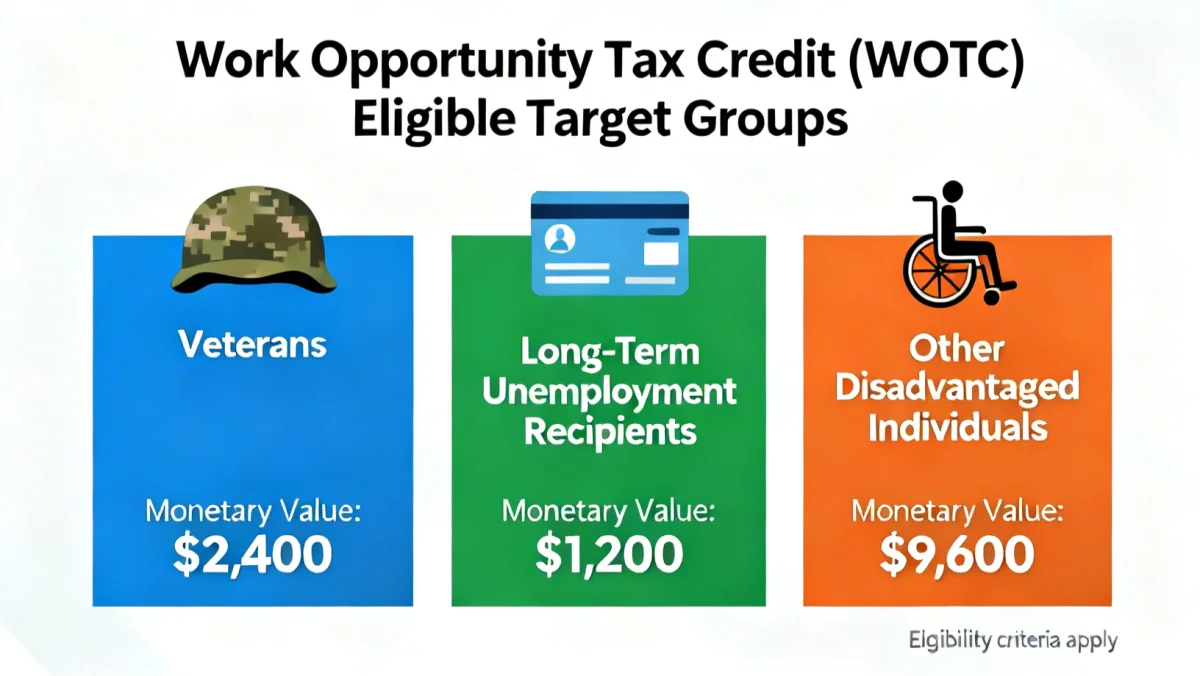
Maximizing the Credit: Up to $9,600 per Hire
The financial incentive offered by the Work Opportunity Tax Credit in 2026 is substantial, with the potential for employers to receive up to $9,600 per eligible new hire. This significant credit can considerably offset labor costs, making the decision to hire from target groups not only socially responsible but also financially astute. Understanding how these credit amounts are calculated and what factors influence the maximum benefit is crucial for businesses looking to optimize their WOTC claims.
The maximum credit amount is not uniform across all target groups; it varies based on the specific category of the eligible individual and their wages during the first year of employment. This tiered structure ensures that the credit is proportionally aligned with the level of employment barrier faced by the individual, providing greater incentives for hiring those with the most significant challenges. Employers should be aware of these differentiations to accurately project their potential savings.
How credit amounts are determined
The calculation of the WOTC credit is primarily based on the qualified wages paid to an eligible employee during their first year of employment. For most target groups, the credit is 40% of the first $6,000 in qualified wages, resulting in a maximum credit of $2,400. However, certain groups, particularly qualified veterans, can yield much higher credits due to their unique circumstances and the additional challenges they may face in securing employment.
- General WOTC: Typically 40% of the first $6,000 in wages, up to $2,400.
- Long-term Unemployment Recipients: Up to $2,400.
- Qualified Veterans with Service-Connected Disabilities and Long-Term Unemployment: Can yield credits up to $9,600, reflecting their unique challenges.
- Summer Youth Employees: A smaller credit, typically 40% of the first $3,000 in wages, up to $1,200, due to the seasonal nature of their employment.
It’s important to note that the credit is generally available for qualified wages paid during the first year of employment. For certain long-term family assistance recipients, the credit can extend into the second year. Employers must maintain meticulous records of wages paid and employee eligibility to substantiate their claims during an audit. The maximum credit of $9,600 serves as a powerful testament to the program’s commitment to supporting the most vulnerable job seekers and the employers who give them a chance.
The Application Process for WOTC in 2026
Successfully obtaining the Work Opportunity Tax Credit in 2026 hinges on a precise and timely application process. Employers must navigate a series of steps, from initial screening to final certification, ensuring all documentation is accurate and submitted within the strict deadlines. A well-executed application process not only secures the tax credit but also minimizes potential delays and complications.
The application begins at the point of hire, emphasizing the importance of integrating WOTC screening into the standard onboarding procedures. Proactive identification of eligible candidates is key, as retroactive applications are often not permitted or are subject to significantly stricter rules. Employers should establish clear internal protocols to ensure no eligible hire is overlooked and that all necessary forms are completed promptly.
Step-by-step guide to claiming the credit
The process of claiming the WOTC credit involves several critical steps, each with its own requirements and deadlines. Employers must be diligent in following these steps to ensure their eligibility and maximize their potential tax savings.
- Pre-screening and Certification Request: Within 28 days of the eligible individual starting work, employers must submit Form 8850, Pre-Screening Notice and Certification Request for the Work Opportunity Credit, to their respective state workforce agency (SWA). This form initiates the certification process.
- Supporting Documentation: Along with Form 8850, employers must collect and submit supporting documentation to the SWA to verify the new hire’s eligibility for a specific target group. This might include proof of unemployment benefits, veteran status, or receipt of public assistance.
- SWA Review and Certification: The SWA reviews the submitted forms and documentation. If the individual is deemed eligible, the SWA issues a certification letter to the employer. This letter is crucial as it confirms the employee’s status as a member of a WOTC target group.
- Claiming the Credit on Tax Returns: Once certified, employers can claim the credit on their federal income tax return using IRS Form 5884, Work Opportunity Credit. The credit is non-refundable, meaning it can reduce an employer’s tax liability to zero, but it cannot result in a refund beyond that.
It is paramount for employers to adhere to the 28-day submission deadline for Form 8850. Missing this deadline can result in the forfeiture of the credit for that employee. Utilizing specialized WOTC service providers or tax professionals can significantly streamline this process, ensuring compliance and maximizing the chances of successful certification.
Benefits Beyond the Tax Savings for Employers
While the direct financial benefit of up to $9,600 per eligible hire is a powerful motivator, the Work Opportunity Tax Credit in 2026 offers a multitude of advantages that extend far beyond mere tax savings. Employers who strategically leverage WOTC can realize significant improvements in their workforce, public image, and overall business sustainability. These broader benefits underscore the program’s holistic approach to economic and social development.
Hiring from WOTC target groups often brings a fresh perspective and a strong work ethic to a company. Many eligible individuals are highly motivated to succeed and grateful for the opportunity, which can translate into increased employee loyalty and reduced turnover. Furthermore, embracing diversity through WOTC hiring can enrich a company’s culture, fostering a more inclusive and innovative environment that attracts top talent and enhances creativity.
Enhancing corporate social responsibility and public image
Participating in programs like WOTC demonstrates a company’s commitment to corporate social responsibility (CSR). By actively hiring individuals who face employment barriers, businesses contribute positively to their communities and society at large. This can significantly boost their public image and brand reputation, appealing to socially conscious consumers and investors.
- Improved Brand Perception: Companies known for inclusive hiring often enjoy a more positive public image.
- Attracting Talent: A diverse and inclusive workplace can be a magnet for talent, including those not directly covered by WOTC.
- Community Engagement: Hiring from local target groups strengthens community ties and fosters goodwill.
- Employee Morale: Employees often feel proud to work for an organization that values diversity and contributes to social good.
Beyond the tangible benefits, the intangible aspect of making a difference in someone’s life holds immense value. Providing stable employment to individuals who have struggled to find work can be transformative, empowering them to achieve financial independence and contribute meaningfully to the economy. This ripple effect creates a stronger, more resilient society, making WOTC a win-win for both businesses and the communities they serve.
Common Misconceptions and Pitfalls to Avoid
Despite the significant advantages offered by the Work Opportunity Tax Credit, many employers either fail to utilize it or encounter challenges due to common misconceptions and procedural pitfalls. Understanding these potential obstacles in advance is crucial for a smooth and successful WOTC experience in 2026. Proactive awareness can save time, prevent forfeiture of credits, and ensure compliance with federal regulations.
One prevalent misconception is that applying for WOTC is overly complex and time-consuming, deterring many businesses from even attempting the process. While it does require diligence, the process is manageable, especially with proper planning and, if necessary, external assistance. Another common pitfall is misunderstanding the eligibility criteria, leading to incorrect certifications and subsequent denial of credits.
Ensuring compliance and maximizing success
To fully benefit from WOTC, employers must commit to strict compliance and meticulous record-keeping. Avoiding common mistakes can significantly increase the likelihood of successful certification and credit realization.
- Missing the 28-Day Deadline: The most frequent error is failing to submit Form 8850 within 28 days of the hire date. This deadline is non-negotiable and missing it almost always results in forfeiture of the credit for that employee.
- Incomplete or Incorrect Documentation: Submitting forms with missing information or insufficient proof of eligibility can lead to delays or denials. Ensure all required fields are filled out accurately and supporting documents are attached.
- Lack of Employee Cooperation: Sometimes, eligible employees may be hesitant or unable to provide the necessary information or consent. Employers should clearly explain the benefits of WOTC and assure employees of data privacy.
- Misinterpreting Eligibility Criteria: Each target group has specific, detailed requirements. A general understanding is not enough; employers must delve into the precise definitions to avoid errors.
- Not Utilizing Available Resources: State Workforce Agencies (SWAs) and specialized WOTC service providers offer valuable guidance and assistance. Failing to leverage these resources can make the process unnecessarily difficult.
By being vigilant about these potential pitfalls, employers can navigate the WOTC application process with confidence. Investing in training for HR staff on WOTC requirements and maintaining organized records are essential steps toward maximizing the credit’s benefits and ensuring long-term compliance.
The Future Outlook of WOTC and Employer Engagement in 2026
Looking ahead to 2026, the Work Opportunity Tax Credit remains a vital program for fostering inclusive employment and providing valuable incentives to businesses. Its continued relevance is underpinned by ongoing economic dynamics and the persistent need to support individuals facing employment barriers. Employers who embrace WOTC are not just accessing a tax benefit; they are investing in a future where diverse talent is recognized and utilized to its fullest potential.
The landscape of employment is constantly evolving, with new challenges and opportunities emerging. WOTC’s adaptability, often through legislative extensions and minor adjustments, ensures its continued effectiveness as a tool for economic stimulus. As businesses increasingly prioritize diversity, equity, and inclusion, the program aligns perfectly with modern corporate values, offering a tangible way to put these principles into practice.
Strategic integration into hiring practices
For employers in 2026, integrating WOTC into strategic hiring practices goes beyond mere compliance; it becomes an integral part of talent acquisition and workforce development. By proactively identifying and targeting eligible individuals, companies can build stronger, more diverse teams that reflect broader societal demographics.
- Early Screening: Implement WOTC screening as a routine part of the application and interview process, not as an afterthought.
- Training and Awareness: Educate HR and recruiting teams on WOTC eligibility criteria and the application process to ensure consistent identification and processing of eligible candidates.
- Partnerships: Collaborate with community organizations, vocational rehabilitation centers, and veteran support groups to access a pool of WOTC-eligible talent.
- Technology Solutions: Utilize WOTC processing software or service providers to streamline documentation, submission, and tracking, reducing administrative burdens.
The long-term outlook for WOTC is positive, given its proven track record of success and bipartisan support. As the economy continues to shift, programs that encourage employment for all segments of the population will remain critical. Employers who strategically engage with WOTC in 2026 will not only reap significant financial rewards but also contribute to a more equitable and prosperous society, solidifying their role as responsible corporate citizens.
| Key Aspect | Brief Description |
|---|---|
| Program Goal | Incentivizes employers to hire individuals from target groups facing employment barriers. |
| Maximum Credit | Up to $9,600 per eligible hire, depending on the target group and wages. |
| Key Requirement | Submit Form 8850 to SWA within 28 days of hire date. |
| Broader Impact | Enhances diversity, corporate social responsibility, and community well-being. |
Frequently Asked Questions About WOTC 2026
The primary goal of WOTC 2026 is to incentivize employers to hire individuals from specific target groups who face significant barriers to employment, thereby fostering economic inclusion and reducing unemployment among these populations.
Employers can save up to $9,600 per eligible new hire through WOTC 2026. The exact amount depends on the specific target group the employee belongs to and the qualified wages paid during their first year of employment.
The most crucial step is submitting IRS Form 8850, Pre-Screening Notice and Certification Request, to your state workforce agency within 28 days of the eligible individual’s start date. Missing this deadline often results in credit forfeiture.
No, only individuals who belong to specific target groups defined by the WOTC program are eligible. These groups include qualified veterans, long-term unemployment recipients, SNAP recipients, and others facing employment barriers.
WOTC offers benefits like enhanced corporate social responsibility, an improved public image, increased workforce diversity, and potentially higher employee loyalty and morale, contributing to a more robust and inclusive business environment.
Conclusion
The Work Opportunity Tax Credit (WOTC) in 2026 stands as a powerful federal incentive, offering employers significant financial benefits while simultaneously promoting social good. By providing tax credits of up to $9,600 for hiring individuals from specific target groups, WOTC encourages businesses to build more diverse and inclusive workforces. Beyond the tangible tax savings, participation in this program enhances a company’s corporate social responsibility, improves community engagement, and can lead to a more motivated and loyal employee base. Understanding the eligibility criteria, adhering to the application process, and avoiding common pitfalls are essential for maximizing these benefits. As businesses continue to navigate dynamic economic landscapes, WOTC remains a critical tool for fostering growth, supporting vulnerable populations, and building a stronger, more equitable future for all.