Defense Spending 2026: Pentagon Budget Proposes 6% Increase

The Pentagon’s proposed 6% increase in its 2026 budget aims to significantly modernize US military capabilities, ensuring preparedness against evolving global security challenges.
As 2026 unfolds, the global security landscape continues its rapid evolution, presenting novel challenges and demanding innovative responses. In this context, the proposed 6% increase in the Pentagon Budget 2026 marks a pivotal moment for US defense strategy, signaling a robust commitment to modernizing military capabilities and maintaining a decisive edge against potential adversaries.
Understanding the 2026 Defense Budget Proposal
The Pentagon’s budget proposal for 2026 is more than just a numerical adjustment; it represents a strategic realignment aimed at addressing the complex threats of the mid-2020s. This significant increase is designed to fund critical areas, from advanced weapon systems to enhanced cybersecurity, ensuring that the US military remains at the forefront of global defense. The proposal reflects a clear understanding that future conflicts will not be fought with yesterday’s technology.
This budget hike is not simply about spending more, but about spending smarter. It prioritizes investments that yield long-term strategic advantages, focusing on technologies and training that can adapt to rapidly changing geopolitical dynamics. The emphasis is on capabilities that deter aggression and, if necessary, provide overwhelming superiority in any theater of operation.
Key Drivers Behind the Budget Increase
Several factors are driving the push for increased defense spending. Geopolitical tensions, the rise of near-peer competitors, and the accelerating pace of technological innovation all play a role. The Pentagon recognizes the need to stay ahead of adversaries who are also rapidly modernizing their forces.
- Global Competition: The emergence of sophisticated military powers necessitates continuous investment in advanced defense technologies.
- Technological Advancement: Keeping pace with breakthroughs in AI, quantum computing, and hypersonics is crucial for maintaining a technological edge.
- Cybersecurity Threats: The increasing frequency and sophistication of cyberattacks demand robust defensive and offensive cyber capabilities.
- Force Readiness: Ensuring personnel are well-trained and equipped with the best tools remains a top priority for operational effectiveness.
In essence, the 2026 budget proposal is a forward-looking document, designed to equip the US military for the challenges of tomorrow rather than just today. It’s a proactive measure to safeguard national interests and promote global stability in an increasingly uncertain world.
Modernizing US Military Capabilities: A Strategic Imperative
The core of the 2026 budget increase is dedicated to comprehensive modernization. This isn’t just about replacing old equipment; it’s about fundamentally transforming how the US military operates, leveraging cutting-edge technology to create a more agile, resilient, and lethal force. The aim is to integrate new systems seamlessly, enhancing interoperability across all branches.
Modernization efforts span a wide array of domains, from air and naval power to ground forces and space operations. The goal is to build a military that can deter and defeat any threat, anywhere, anytime. This requires a sustained commitment to research and development, as well as the rapid acquisition of proven technologies.
Focus Areas for Modernization
The Pentagon has identified several key areas that will receive significant investment under the new budget. These areas are considered vital for maintaining strategic superiority and addressing future threats effectively. The focus is on capabilities that offer a decisive advantage in complex operational environments.
- Next-Generation Air Dominance: Investing in advanced fighter jets, drones, and air defense systems to ensure continued control of the skies.
- Naval Superiority: Developing new classes of warships, submarines, and unmanned maritime systems for enhanced global projection.
- Long-Range Precision Firepower: Expanding capabilities for accurate strikes from extended distances, reducing risk to personnel.
- Space and Cyber Warfare: Strengthening assets in orbit and digital battlefields, recognizing these as critical domains for modern conflict.
These investments are not isolated; they are part of an integrated strategy to ensure that each component of the military ecosystem works in concert, amplifying overall effectiveness. The modernization plan is a testament to the adaptive nature of US defense policy.
Impact on Defense Industry and Technological Innovation
A substantial increase in defense spending naturally has profound implications for the defense industry and the broader ecosystem of technological innovation. This influx of funding stimulates research and development, fosters job creation, and drives advancements that often have spillover benefits for the civilian sector. The defense budget acts as a powerful catalyst for innovation.
Defense contractors, from major aerospace companies to specialized tech startups, will see increased opportunities for contracts and partnerships. This creates a dynamic environment where cutting-edge ideas can be brought to fruition, accelerating the pace of technological progress. The relationship between defense spending and innovation is symbiotic, with each feeding the other.

Driving Economic Growth and Job Creation
The defense sector is a significant employer, and increased spending translates directly into more jobs, both within defense companies and in supporting industries. Engineers, scientists, manufacturing workers, and countless others benefit from these investments, contributing to economic stability and growth across the nation.
- Research and Development: Enhanced funding for R&D leads to breakthroughs in materials science, artificial intelligence, and advanced manufacturing.
- Manufacturing Boost: Production of new aircraft, ships, and weapons systems creates demand for skilled labor and expands industrial capacity.
- Supply Chain Expansion: A robust defense budget supports a vast network of suppliers and small businesses, strengthening the overall economy.
Ultimately, the proposed Pentagon Budget 2026 is not just an expenditure; it’s an investment in the nation’s security and its economic future, fostering an environment where innovation thrives and high-tech jobs are created.
Addressing Emerging Global Threats in 2026
The strategic environment in 2026 is characterized by a complex interplay of traditional and non-traditional threats. From state-sponsored cyber warfare to the proliferation of advanced weaponry, the US military must be prepared to confront a diverse range of challenges. The 6% budget increase directly addresses these evolving threats, providing the resources needed to develop adaptive strategies and capabilities.
This includes investments in intelligence gathering, surveillance, and reconnaissance (ISR) capabilities, as well as the development of countermeasures against hypersonic missiles and other advanced adversarial systems. The budget ensures that the US maintains its deterrent posture and can respond effectively to any crisis.
Prioritizing Strategic Deterrence
A key objective of the increased spending is to bolster strategic deterrence. By demonstrating superior capabilities and a willingness to invest in defense, the US aims to dissuade potential adversaries from aggressive actions. This involves a credible nuclear deterrent, robust conventional forces, and advanced cyber capabilities.
The budget also allocates funds for enhanced intelligence sharing with allies, strengthening collective security and presenting a united front against common threats. International cooperation remains a cornerstone of US defense policy, and these investments support that framework.
Budget Allocation Breakdown: Where the Money Goes
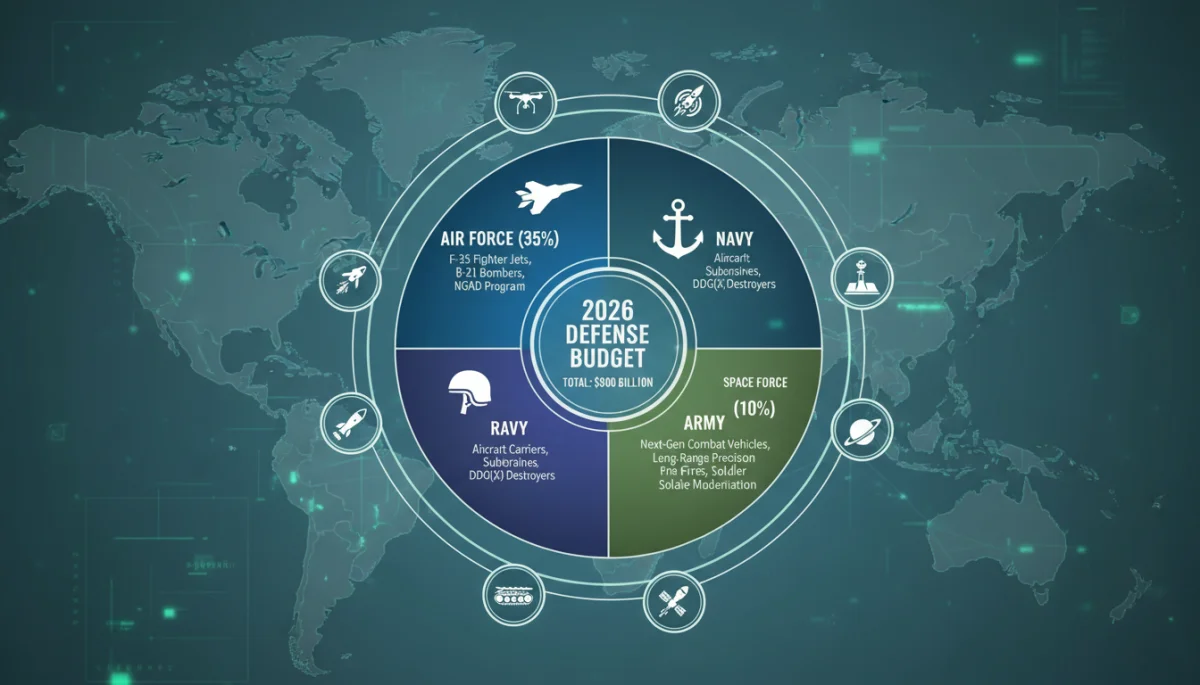
A 6% increase in the Pentagon Budget 2026 requires a meticulous allocation strategy to ensure maximum impact. The proposal details how funds will be distributed across various branches of the military and key operational areas, reflecting a balanced approach to defense needs. Transparency in this allocation is crucial for public and congressional oversight.
While specific figures are subject to congressional approval, the general outline emphasizes a strong commitment to readiness, modernization, and the welfare of service members. Each dollar is intended to serve a strategic purpose, enhancing the nation’s defense posture.
Key Investment Categories
The budget is typically divided into several main categories, each addressing a critical aspect of military operations and development. Understanding these categories provides insight into the Pentagon’s strategic priorities.
- Personnel: Funding for salaries, benefits, and training of active-duty and reserve forces, ensuring a high-quality volunteer force.
- Operations and Maintenance (O&M): Covering day-to-day costs, including fuel, spare parts, facility upkeep, and routine exercises.
- Procurement: Purchasing new weapon systems, aircraft, ships, and vehicles, directly supporting modernization efforts.
- Research, Development, Test, and Evaluation (RDT&E): Investing in future technologies and innovative solutions to maintain a technological edge.
- Military Construction (MILCON): Funding for new bases, facilities, and infrastructure improvements to support military operations.
This detailed breakdown ensures that every aspect of military readiness and future capability is adequately resourced. The allocation reflects a comprehensive strategy to meet both immediate operational needs and long-term strategic objectives.
Challenges and Oversight in Defense Spending
While the proposed 6% increase in the Pentagon Budget 2026 is deemed necessary for national security, it also brings forth significant challenges, particularly regarding fiscal responsibility and effective oversight. Large defense budgets inherently attract scrutiny, and ensuring that funds are spent efficiently and transparently is paramount. Public and congressional oversight mechanisms play a critical role in this process.
Concerns often arise regarding cost overruns, program delays, and the potential for wasteful spending. Addressing these issues requires robust accountability measures, continuous evaluation of defense programs, and a commitment to optimizing resource allocation. The balance between strategic necessity and fiscal prudence is a constant challenge.
Ensuring Accountability and Efficiency
To mitigate potential issues, the Pentagon and Congress implement various oversight mechanisms. These include regular audits, detailed reporting requirements, and competitive bidding processes for contracts. The goal is to maximize the return on investment for taxpayers and ensure that every dollar contributes effectively to national security.
- Congressional Review: Committees scrutinize budget requests, hold hearings, and approve appropriations, ensuring legislative oversight.
- Independent Audits: Government Accountability Office (GAO) and Inspector General (IG) reports provide independent assessments of defense spending.
- Program Management: Improved project management techniques and risk assessment help prevent cost overruns and schedule delays.
- Technological Assessment: Continuous evaluation of new technologies ensures that investments are made in truly transformative capabilities.
Ultimately, the success of the 2026 defense budget hinges not just on the amount of funding, but on the effectiveness of its implementation and the rigor of its oversight. A transparent and accountable process is essential to maintain public trust and achieve strategic objectives.
| Key Point | Brief Description |
|---|---|
| 6% Budget Increase | Pentagon’s proposed increase for 2026 to modernize US military capabilities. |
| Military Modernization | Focus on next-gen air dominance, naval superiority, and long-range precision firepower. |
| Addressing Global Threats | Investments target cyber warfare, advanced weaponry, and strategic deterrence. |
| Economic Impact | Stimulates R&D, job creation, and growth within the defense industry and related sectors. |
Frequently Asked Questions About the 2026 Pentagon Budget
The increase is proposed to counter evolving global threats, maintain a technological edge over near-peer competitors, and modernize US military capabilities across all branches, ensuring national security in a complex geopolitical landscape.
Key areas include next-generation air dominance, naval superiority, long-range precision firepower, and advancements in space and cyber warfare. There will also be significant investment in research and development for future technologies.
Increased defense spending is expected to stimulate economic growth by boosting the defense industry, fostering technological innovation, and creating jobs in engineering, manufacturing, and R&D sectors across the nation.
The budget targets threats such as state-sponsored cyber warfare, the proliferation of advanced conventional weapons, and the strategic challenges posed by rising global powers, emphasizing deterrence and rapid response capabilities.
Rigorous oversight includes congressional review, independent audits by the GAO and Inspector General, and robust program management practices to prevent waste, fraud, and ensure fiscal accountability for taxpayer dollars.
Conclusion
The proposed 6% increase in the Pentagon Budget 2026 is a critical step in ensuring the United States maintains its military advantage and effectively addresses the complex security challenges of the coming years. This strategic investment in modernization, technological innovation, and force readiness underscores a proactive approach to national defense. While fiscal oversight remains crucial, the emphasis on future capabilities is designed to safeguard US interests and promote global stability in an ever-evolving world.