2026 Estate Planning Updates: Essential Changes for Wealth Transfer

The 2026 estate planning updates are crucial for anyone looking to optimize wealth transfer, impacting gift and estate tax exemptions significantly.
As we approach 2026, understanding the impending shifts in financial regulations is paramount for securing your legacy. The year 2026 Estate Planning Updates: Essential Changes to Consider for Wealth Transfer will bring significant changes that could dramatically impact how assets are passed down. This article delves into what you need to know to adapt your strategies effectively.
Understanding the Looming Sunset of Tax Cuts and Jobs Act Provisions
The Tax Cuts and Jobs Act (TCJA) of 2017 brought about substantial changes to estate and gift tax exemptions, significantly increasing them. However, many of these provisions are set to expire, or ‘sunset,’ at the end of 2025, leading to a reversion to pre-TCJA levels, adjusted for inflation. This impending change in 2026 is a critical factor for individuals with substantial wealth to consider in their estate planning.
The current landscape has allowed for unparalleled opportunities in wealth transfer, but this window is rapidly closing. Proactive planning is not just advisable; it’s essential to mitigate potential tax liabilities and ensure your assets are distributed according to your wishes. Without proper foresight, families could face unexpected tax burdens that diminish the value of their inherited wealth.
Key Exemption Adjustments
The most significant impact of the TCJA sunset will be on the federal estate and gift tax exemption amounts. While the exact figures for 2026 will depend on inflation adjustments, it’s widely anticipated that the exemption will approximately halve from its current levels. This reduction will bring many more estates into the federal estate tax net, requiring careful consideration of gifting strategies and trust structures.
- Reduced Exemption Amounts: Expect a significant decrease in the federal estate and gift tax exemption, potentially impacting a broader range of estates.
- Increased Taxable Estates: More estates will likely become subject to federal estate tax due to the lower exemption thresholds.
- Gift Tax Planning: Strategies involving lifetime gifts become even more critical before the exemption reduction takes effect.
It’s vital to consult with an estate planning attorney or financial advisor to understand how these changes specifically apply to your financial situation. They can help you assess your current estate plan and identify areas that require immediate attention to leverage the higher exemptions while they are still available.
Revisiting Gifting Strategies Before 2026
With the federal estate and gift tax exemption poised to decrease in 2026, the period leading up to this change presents a unique opportunity for wealth transfer through gifting. Strategic gifting can effectively reduce the size of your taxable estate, thereby minimizing future estate tax liabilities. This approach requires careful consideration of both annual exclusion gifts and larger, lifetime gifts.
Many individuals are now evaluating accelerating their gifting plans to utilize the higher exemption amounts available through 2025. This involves understanding the nuances of gift tax rules and ensuring compliance to avoid unintended consequences. The objective is to transfer assets out of your estate without incurring gift tax, taking full advantage of current favorable laws.
Maximizing Annual Exclusion Gifts
Annual exclusion gifts allow you to give a certain amount to any number of individuals each year without using up any of your lifetime gift tax exemption or incurring gift tax. For 2025, this amount is expected to be around $18,000 per recipient. This strategy can be particularly effective over several years, especially for larger families, to gradually reduce the size of an estate.
- Utilize ‘Crummey’ Trusts: These trusts can hold gifts for beneficiaries, allowing them to qualify for the annual exclusion while still providing future asset protection.
- Spousal Gifting: Spouses can combine their annual exclusions to gift double the amount to each recipient, further maximizing wealth transfer.
Beyond annual exclusion gifts, consider making larger gifts that utilize your lifetime exemption before it shrinks. These gifts are often made into irrevocable trusts, which can offer significant asset protection and tax benefits. However, once assets are placed into an irrevocable trust, they generally cannot be retrieved, emphasizing the need for careful planning and professional guidance.
The Role of Trusts in a Changing Tax Landscape
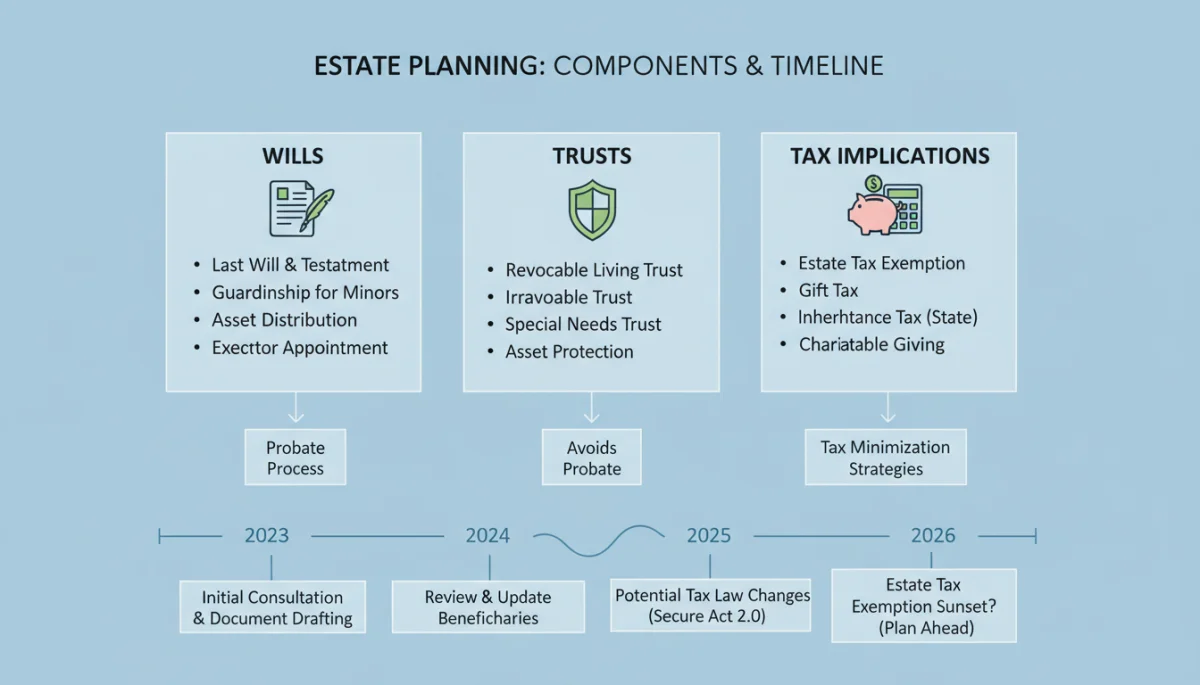
Trusts have long been a cornerstone of effective estate planning, offering flexibility, asset protection, and tax efficiency. As we approach the 2026 Estate Planning Updates, their role becomes even more critical in navigating the anticipated changes to wealth transfer rules. Understanding the various types of trusts and how they can be strategically employed is essential for optimizing your estate plan.
The versatility of trusts allows them to address a wide array of planning goals, from minimizing estate taxes to providing for beneficiaries with special needs, or ensuring privacy in asset distribution. With the potential reduction in federal estate tax exemptions, certain trusts will become even more valuable tools for high-net-worth individuals seeking to preserve their wealth for future generations.
Irrevocable Trusts for Asset Protection
Irrevocable trusts, once established, cannot be easily modified or revoked, making them powerful tools for removing assets from your taxable estate. This can significantly reduce future estate tax liabilities, especially as exemption amounts are expected to decrease. Common types include:
- Grantor Retained Annuity Trusts (GRATs): Allow you to transfer appreciating assets to beneficiaries with minimal gift tax liability, retaining an annuity payment for a set term.
- Irrevocable Life Insurance Trusts (ILITs): Remove life insurance proceeds from your taxable estate, providing liquidity for estate taxes or direct inheritance to beneficiaries.
- Spousal Lifetime Access Trusts (SLATs): Allow one spouse to make gifts into an irrevocable trust for the benefit of the other spouse and other descendants, utilizing their gift tax exemption while still providing indirect access to the funds within the family unit.
Each type of irrevocable trust serves a specific purpose, and the choice depends on your unique financial situation and goals. Working with an experienced estate planning attorney is crucial to determine which trust structure best suits your needs and to ensure it is properly drafted and funded to achieve its intended benefits.
Impact on Business Succession Planning
For business owners, the 2026 Estate Planning Updates will have profound implications for succession planning. The potential reduction in estate tax exemptions could significantly increase the tax burden on a family business upon the owner’s death, jeopardizing its continuity and the legacy intended for future generations. Proactive planning is therefore more critical than ever.
Effective business succession planning goes beyond simply naming an heir; it involves complex financial, legal, and emotional considerations. The goal is to ensure a smooth transition of leadership and ownership while minimizing tax liabilities and maintaining the business’s value. The impending tax changes necessitate a fresh look at existing plans and strategies.
Strategies for Business Owners
Several strategies can help business owners navigate the upcoming changes and protect their legacy. These often involve a combination of gifting, trust structures, and valuation techniques to minimize the impact of estate taxes.
One common approach is to utilize lifetime gifts of business interests to younger generations or key employees. By transferring ownership gradually over time, business owners can leverage the current higher gift tax exemptions, reducing the value of the business within their taxable estate. This can also provide a structured transition of control and management.
Another crucial strategy involves the use of buy-sell agreements, often funded by life insurance. These agreements ensure a clear path for the transfer of ownership upon the death or disability of a principal, providing liquidity to the estate to cover potential estate taxes without forcing the sale of the business.
- Discounting Strategies: Employing valuation discounts for non-controlling interests or lack of marketability can reduce the taxable value of transferred business interests.
- Charitable Giving: Incorporating charitable trusts or foundations can provide significant tax benefits while fulfilling philanthropic goals and reducing the taxable estate.
Reviewing and updating your business succession plan in light of the 2026 changes is not just a financial necessity but a commitment to the enduring success of your enterprise and the well-being of your family.
The Importance of Professional Guidance and Regular Review
Navigating the complexities of 2026 Estate Planning Updates requires more than a casual understanding of tax laws; it demands expert knowledge and a proactive approach. The ever-evolving nature of tax legislation, coupled with personal life changes, underscores the critical importance of professional guidance and regular reviews of your estate plan. Relying on outdated strategies can lead to unforeseen tax burdens and can compromise your wealth transfer objectives.
An estate plan is not a static document; it’s a dynamic framework that needs to adapt to legislative changes, market conditions, and personal circumstances. Engaging a team of experienced professionals, including estate planning attorneys, financial advisors, and tax specialists, ensures that your plan remains robust and aligned with your goals.
Building Your Advisory Team
A comprehensive estate planning strategy benefits from a collaborative approach, bringing together experts with diverse specializations. Each member of your advisory team plays a crucial role in ensuring all aspects of your financial and legal situation are considered.
- Estate Planning Attorney: Drafts legal documents such as wills, trusts, and powers of attorney, ensuring they comply with current laws and effectively reflect your wishes.
- Financial Advisor: Helps integrate your estate plan with your overall financial strategy, including investment management, retirement planning, and charitable giving.
- Tax Specialist: Provides expert advice on minimizing estate, gift, and income taxes, staying abreast of legislative changes and identifying opportunities for tax efficiency.
Regular reviews of your estate plan, ideally annually or whenever significant life events occur, are essential. These events could include changes in marital status, the birth of children or grandchildren, significant changes in asset values, or the acquisition of new businesses. A timely review ensures that your plan continues to meet your objectives and adapts to new legal and financial landscapes.
State-Specific Considerations in Estate Planning for 2026
While federal estate tax exemptions are a major focus for the 2026 Estate Planning Updates, it’s crucial to remember that state-specific estate and inheritance taxes can significantly impact wealth transfer. Unlike the federal system, which has a unified estate and gift tax, states have varying approaches, some imposing their own estate taxes, others inheritance taxes, and some none at all. This creates a complex patchwork that requires careful consideration based on your state of residence and where your assets are located.
The interplay between federal and state tax laws can lead to unexpected liabilities if not properly addressed. For residents of states with their own estate or inheritance taxes, even if your estate falls below the federal exemption amount, it might still be subject to state-level taxation. This often necessitates localized planning strategies to mitigate potential impacts.
Navigating State Estate and Inheritance Taxes
Understanding the specific tax landscape of your state is paramount for effective estate planning. Some states impose an estate tax, which is levied on the total value of a deceased person’s assets before distribution to heirs. Other states levy an inheritance tax, which is paid by the beneficiaries based on the value of the assets they receive and their relationship to the deceased.
- Estate Tax States: Be aware of your state’s specific exemption amounts and tax rates, as these can differ significantly from federal levels.
- Inheritance Tax States: Understand which beneficiaries are subject to inheritance tax and at what rates, as exemptions often vary by relationship (e.g., spouses and direct descendants may be exempt).
- Portability Issues: Unlike the federal estate tax exemption, state estate tax exemptions typically do not offer portability, meaning a surviving spouse cannot use the deceased spouse’s unused exemption.
For individuals with property in multiple states or those considering a change of residence, the state-specific implications become even more complex. Domicile, the legal home of an individual, plays a critical role in determining which state’s tax laws apply to an estate. Consulting with an attorney who specializes in multi-state estate planning is essential to ensure compliance and optimize wealth transfer across different jurisdictions.
The varying state laws underscore the personalized nature of estate planning. What works in one state may not be optimal in another, making tailored advice indispensable as we head into the 2026 changes.
| Key Update | Brief Description |
|---|---|
| TCJA Sunset | Federal estate and gift tax exemptions expected to halve. |
| Gifting Opportunities | Utilize higher exemptions for lifetime gifts before 2026. |
| Trust Strategies | Irrevocable trusts gain importance for asset protection and tax reduction. |
| Professional Review | Essential for adapting to new laws and personal circumstances. |
Frequently Asked Questions About 2026 Estate Planning
The primary impact of the 2026 estate planning updates is the anticipated reduction in federal estate and gift tax exemptions. These exemptions are expected to revert to approximately half of their current levels, affecting how individuals transfer wealth and potentially increasing estate tax liabilities for many high-net-worth estates.
Yes, accelerating your gifting strategy before 2026 is a common recommendation for those who can afford it. Utilizing the current higher federal estate and gift tax exemptions through lifetime gifts can effectively reduce the size of your taxable estate and mitigate future estate tax burdens. Consult a financial advisor for personalized guidance.
Trusts, especially irrevocable trusts, will become even more crucial tools in estate planning after the 2026 changes. They can help remove assets from your taxable estate, protect assets, and ensure wealth is transferred according to your wishes, minimizing tax exposure under the new, lower exemption thresholds.
State laws play a significant role, as many states have their own estate or inheritance taxes independent of federal law. These state-specific taxes can greatly impact your wealth transfer plans, even if your estate falls below the federal exemption. It’s essential to understand your state’s specific regulations.
Professional guidance from estate planning attorneys, financial advisors, and tax specialists is vital because the 2026 changes are complex. Experts can help you understand the nuances, assess your specific situation, update your estate plan to comply with new laws, and implement strategies to optimize wealth transfer and minimize tax liabilities effectively.
Conclusion
The impending 2026 Estate Planning Updates signal a significant shift in the landscape of wealth transfer, making proactive and informed planning more critical than ever. The sunset of certain TCJA provisions will reduce federal estate and gift tax exemptions, necessitating a thorough review of existing estate plans. By strategically utilizing gifting opportunities, leveraging various trust structures, and seeking expert professional guidance, individuals can navigate these changes effectively. Adapting your estate plan now will not only help mitigate potential tax burdens but also ensure that your legacy is preserved and transferred according to your precise wishes for generations to come.