2026 Farm Bill: Subsidies, Production, and 8% Food Price Impact
The 2026 Farm Bill will introduce significant changes to agricultural subsidies, directly influencing US farm production and leading to an estimated 8% increase in food prices for consumers.
The agricultural landscape in the United States is always evolving, and the upcoming 2026 Farm Bill Impact is set to usher in significant transformations. This pivotal legislation, enacted typically every five years, dictates the framework for agricultural and food policies, profoundly affecting farmers, consumers, and the broader economy. As discussions and proposals intensify, understanding the potential changes in subsidies, their influence on agricultural production, and the projected 8% increase in food prices becomes crucial for every American household.
understanding the 2026 farm bill: a foundational overview
The Farm Bill is a comprehensive piece of legislation that governs various aspects of the American food and agricultural system. It typically addresses commodity programs, conservation, trade, nutrition assistance, farm credit, rural development, research, forestry, energy, horticulture, and crop insurance. The 2026 iteration is expected to build upon previous frameworks while also introducing novel approaches to address contemporary challenges facing the agricultural sector.
Historically, Farm Bills have been instrumental in stabilizing farm incomes, ensuring a reliable food supply, and promoting sustainable land management. The legislative process involves extensive debate, negotiation, and compromise among diverse stakeholders, including farmers, environmental groups, food advocates, and industry representatives. The final bill reflects a delicate balance of competing interests and priorities.
key components of farm bill legislation
- Commodity Programs: These provide financial support and risk management tools for producers of staple crops like corn, soybeans, wheat, and cotton, often through price loss coverage or agricultural risk coverage.
- Conservation Programs: Initiatives aimed at protecting natural resources, promoting sustainable farming practices, and enhancing environmental quality on agricultural lands.
- Nutrition Programs: The largest portion of the Farm Bill budget, primarily funding the Supplemental Nutrition Assistance Program (SNAP), which helps low-income individuals and families purchase food.
- Crop Insurance: Federally subsidized insurance programs that protect farmers against losses due to natural disasters or declines in commodity prices.
The 2026 Farm Bill is anticipated to focus heavily on modernizing these components, adapting them to new economic realities and technological advancements. The goal is to create a more resilient and equitable food system for the future, while also addressing the pressing issues of climate change and global food security. The decisions made within this bill will resonate across the entire supply chain, from rural farms to urban grocery stores.
new subsidy structures and their agricultural production implications
One of the most keenly watched aspects of the 2026 Farm Bill is the proposed overhaul of agricultural subsidies. These financial aids are designed to support farmers, stabilize market prices, and ensure a consistent food supply. However, the exact nature and distribution of these new subsidies could significantly alter planting decisions, technological adoption, and overall agricultural output across the nation.
Early proposals suggest a shift towards more targeted subsidies, potentially favoring certain crops deemed critical for national food security or those produced using environmentally friendly methods. This could lead to a reallocation of resources, with some regions or crop types receiving increased support while others see a reduction. Such changes are not without controversy, as they can disproportionately affect different farming communities.
potential changes in subsidy allocation
- Climate-Smart Agriculture Incentives: Increased funding for practices that reduce greenhouse gas emissions, improve soil health, and conserve water, encouraging farmers to adopt more sustainable techniques.
- Supply Chain Resilience Grants: Programs aimed at strengthening domestic food supply chains, reducing reliance on imports, and enhancing the ability to withstand disruptions.
- Support for Specialty Crops: Potential increases in funding for fruits, vegetables, and other specialty crops, diversifying agricultural production and promoting healthier diets.
The financial incentives embedded within the 2026 Farm Bill are expected to drive specific production choices. Farmers, driven by economic rationality, will likely adjust their crop rotations, input usage, and land management strategies to maximize the benefits from the new subsidy structures. This could lead to an increase in the production of certain commodities while potentially decreasing others, ultimately influencing the availability and variety of food products in the market.
the projected 8% increase in food prices: causes and effects
A significant concern arising from preliminary analyses of the 2026 Farm Bill proposals is the projected 8% increase in food prices. This forecast is not a simple consequence of increased subsidies but rather a complex interplay of factors influenced by the new legislation, supply chain dynamics, and broader economic trends. Understanding the underlying causes is essential for consumers and policymakers alike.
One primary driver could be the restructuring of commodity programs, which might reduce direct payments for certain staple crops, leading farmers to seek higher market prices to maintain profitability. Additionally, increased investment in climate-smart practices, while beneficial for the environment, can sometimes entail higher initial costs for farmers, which may then be passed on to consumers. Inflationary pressures and global market fluctuations will also play a role, amplifying the impact of domestic policy changes.
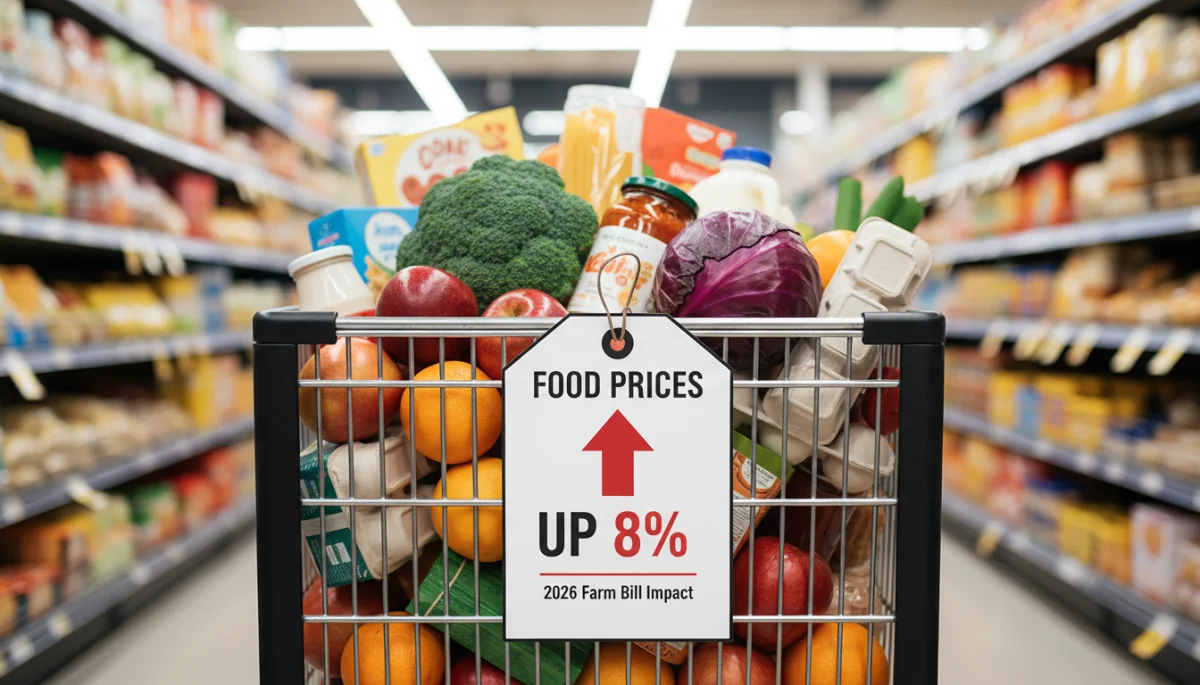
The ripple effect of an 8% rise in food prices would be felt across all income brackets but would disproportionately impact low-income households. Families already struggling with food insecurity could face even greater challenges, necessitating a reevaluation of existing nutrition assistance programs to mitigate the adverse effects. The cost of living would increase, potentially leading to shifts in consumer purchasing habits and demand for more affordable food options.
factors contributing to food price inflation
- Input Cost Increases: Higher costs for fertilizers, fuel, labor, and equipment can push up production expenses, which are then reflected in retail prices.
- Supply Chain Disruptions: Any inefficiencies or bottlenecks in processing, transportation, or distribution can add to the final cost of food.
- Global Market Dynamics: International demand, trade policies, and geopolitical events can influence commodity prices, affecting domestic food costs.
- Consumer Demand Shifts: Changes in dietary preferences or increased demand for specific products can drive up prices if supply cannot keep pace.
Addressing the potential for an 8% food price increase will require a multifaceted approach, combining targeted support for vulnerable populations with policies that promote efficiency and stability within the agricultural supply chain. The balance between supporting farmers and protecting consumers will be a critical challenge for lawmakers.
recent updates and legislative considerations
As 2026 approaches, discussions surrounding the Farm Bill are intensifying, with various legislative bodies and agricultural committees actively engaged in drafting and refining proposals. Recent updates indicate a strong emphasis on sustainability, climate resilience, and ensuring equitable access to healthy food. These considerations are shaping the contours of the new legislation, reflecting a growing awareness of the interconnectedness of food systems, environmental health, and social equity.
One notable development is the increased focus on climate-smart agricultural practices. There’s a push to incentivize farmers to adopt methods that sequester carbon, reduce emissions, and enhance biodiversity. This aligns with broader national and international environmental goals but also raises questions about funding mechanisms and the feasibility of widespread adoption across diverse farming operations. Lawmakers are exploring various grant programs and technical assistance initiatives to facilitate this transition.
key legislative debates
- Funding for Conservation Programs: Debates over the allocation and expansion of conservation programs, balancing environmental benefits with farmer participation and economic viability.
- Reforms to Crop Insurance: Discussions on how to make crop insurance more accessible and affordable for a wider range of farmers, including those growing specialty crops or employing diversified farming systems.
- Nutrition Program Adjustments: Reviewing SNAP benefits and eligibility requirements to ensure they adequately meet the needs of food-insecure populations in the face of rising food costs.
- Support for Beginning Farmers: Proposals to provide greater access to land, capital, and training for new and underserved farmers, fostering a more diverse agricultural workforce.
The legislative process is dynamic, with proposals continually being introduced, debated, and amended. Stakeholder input plays a crucial role, with advocacy groups lobbying for their interests and providing valuable insights into the practical implications of proposed policies. The final form of the 2026 Farm Bill will emerge from this complex negotiation, aiming to address the multifaceted challenges of modern agriculture.
financial impact on farmers and agricultural businesses
The 2026 Farm Bill will undoubtedly have a profound financial impact on farmers and agricultural businesses across the United States. The changes in subsidy structures, commodity programs, and conservation incentives will reshape revenue streams, investment decisions, and operational strategies. Farmers will need to carefully analyze the new provisions to adapt their business models and ensure long-term viability.
For some farmers, particularly those who align with the new emphasis on climate-smart agriculture or specialty crops, the bill could open up new opportunities for funding and market access. Conversely, farmers heavily reliant on traditional commodity payments might face adjustments, requiring them to explore new diversification strategies or efficiency improvements. The cost of compliance with new environmental regulations, even with incentives, could also be a factor for some operations.
managing financial risks and opportunities
- Diversification of Crops: Farmers may consider growing a wider variety of crops to reduce reliance on single commodities and take advantage of new market demands or subsidy programs.
- Adoption of Technology: Investing in precision agriculture, automation, and data analytics can improve efficiency, reduce input costs, and enhance environmental performance.
- Participation in Conservation Programs: Engaging with expanded conservation initiatives can provide additional revenue streams and demonstrate commitment to sustainable practices.
- Strategic Financial Planning: Working with agricultural lenders and financial advisors to navigate changes in credit access, insurance options, and market fluctuations will be crucial.
Beyond individual farms, the entire agricultural supply chain will experience financial shifts. Processors, distributors, and retailers will need to adjust to changes in commodity availability, pricing, and consumer demand. Investment in rural infrastructure and agricultural research, often supported by the Farm Bill, will also have significant economic multipliers, fostering innovation and creating jobs within the sector.
consumer response and market adjustments
The projected 8% increase in food prices, coupled with shifts in agricultural production, will inevitably lead to consumer responses and subsequent market adjustments. Consumers, facing higher grocery bills, are likely to alter their purchasing habits, seeking out more affordable options, changing dietary patterns, or reducing food waste. These behavioral shifts will, in turn, influence demand for various food products and pressure retailers to adapt their offerings.
Retailers and food manufacturers will need to carefully monitor consumer sentiment and market trends. This could involve adjusting product lines, optimizing supply chains to reduce costs, or investing in private label brands to offer more competitive pricing. The increased emphasis on sustainability in the Farm Bill might also resonate with consumers, leading to greater demand for organically grown or environmentally certified products, even at a slightly higher price point.
adapting to new market realities
- Increased Demand for Value Products: Consumers may gravitate towards store brands, bulk purchases, or discounted items to manage rising costs.
- Shifts in Dietary Preferences: A potential for increased consumption of plant-based proteins or more economical food staples if meat and dairy prices rise significantly.
- Focus on Local and Sustainable: Despite price concerns, some consumers may prioritize locally sourced or sustainably produced food, driven by environmental and ethical considerations.
- Retailer Innovation: Supermarkets and food service providers may introduce new loyalty programs, meal kits, or online ordering solutions to retain customers and offer value.
The interplay between consumer demand and market supply will be a continuous cycle of adjustment. As food prices rise, policymakers may also face pressure to expand food assistance programs to ensure that all Americans have access to nutritious food. The success of the 2026 Farm Bill will ultimately be judged not only by its impact on farmers but also by its ability to ensure food security and affordability for the entire population.
| Key Aspect | Brief Description |
|---|---|
| New Subsidies | Shift towards climate-smart agriculture and specialty crops, potentially reallocating resources. |
| Production Impact | Farmers will adapt crop choices and practices, influencing commodity availability. |
| Food Price Increase | Projected 8% rise due to subsidy changes, input costs, and market dynamics. |
| Consumer Response | Changes in purchasing habits and demand for value or sustainable products. |
Frequently Asked Questions About the 2026 Farm Bill
The primary goal of the 2026 Farm Bill is to establish comprehensive agricultural and food policies for the United States, aiming to stabilize farm incomes, ensure a reliable food supply, promote sustainable practices, and provide nutrition assistance to those in need.
New subsidies are expected to shift agricultural production by incentivizing climate-smart practices and specialty crops. This could lead farmers to alter their planting decisions and resource allocation, influencing the overall availability and diversity of food products.
The projected 8% increase in food prices stems from several factors, including potential restructuring of commodity programs, higher costs associated with sustainable farming, ongoing inflationary pressures, and global market dynamics that collectively influence retail food costs.
While an 8% food price increase will affect all consumers, low-income households and those already facing food insecurity will likely be disproportionately impacted. This could necessitate adjustments to federal nutrition assistance programs to mitigate the effects.
Consumers can anticipate shifts in food choices, potentially gravitating towards more affordable products, private labels, or plant-based alternatives. There might also be increased demand for locally sourced or sustainably produced foods, depending on individual priorities and budget constraints.
conclusion
The 2026 Farm Bill stands as a monumental piece of legislation with far-reaching implications for American agriculture, food security, and consumer finances. Its proposed new subsidy structures are poised to reshape agricultural production, nudging farmers towards more sustainable and diversified practices. However, these changes, combined with broader economic pressures, are also projected to result in an approximate 8% increase in food prices, a significant concern for households nationwide. As the legislative process unfolds, a balanced approach that supports farmers while safeguarding consumer access to affordable and nutritious food will be paramount. Understanding these complex interdependencies is crucial for navigating the evolving landscape of the US food system.