Surviving Spouse Benefits 2026: Claiming Social Security
Surviving spouses in 2026 can claim Social Security benefits, crucial for financial stability after a loss, by understanding eligibility criteria and adhering to the three-month application window to maximize support.
Coping with the loss of a spouse is an immensely challenging experience, both emotionally and financially. In 2026, understanding how to navigate the complexities of surviving spouse benefits 2026 from Social Security is more critical than ever. This guide aims to provide clarity and actionable steps for claiming these vital benefits, particularly emphasizing the importance of acting within three months of your loved one’s passing to secure the financial support you are entitled to during such a difficult time.
Understanding Social Security Survivor Benefits in 2026
Social Security survivor benefits provide a financial lifeline to families when a worker dies. These benefits are designed to replace a portion of the deceased worker’s earnings, helping surviving spouses and dependent children maintain their financial footing. For 2026, the rules governing these benefits remain largely consistent with previous years, but it’s always wise to stay informed about any potential adjustments or new requirements.
Eligibility for surviving spouse benefits is determined by several factors, including the deceased’s work history, the surviving spouse’s age, and whether there are dependent children. The Social Security Administration (SSA) calculates benefits based on the deceased’s lifetime earnings, ensuring that those who contributed more to the system receive higher benefits. It’s a complex system, but fundamentally, it aims to provide a safety net for grieving families.
Who is eligible for surviving spouse benefits?
To be eligible for surviving spouse benefits, you generally must meet specific criteria. These criteria primarily revolve around your relationship to the deceased worker, your age, and your marital status at the time of their death. Understanding these foundational requirements is the first step in assessing your potential for receiving support.
- Widows/Widowers: You must have been married to the deceased for at least nine months immediately before their death, unless there are exceptions like accidental death or military service.
- Divorced Spouses: If you were married for at least 10 years, are not currently remarried, and are at least 60 years old (or 50 if disabled), you might be eligible.
- Dependent Children: Unmarried children under age 18 (or 19 if still in high school) or disabled children of any age (if disabled before age 22) can also receive benefits.
The eligibility requirements ensure that benefits are directed to those who were financially dependent on the deceased. The SSA carefully reviews each application to confirm that all conditions are met, which is why providing accurate and complete information is crucial during the application process.
The Critical Three-Month Window for Claiming Benefits
The period immediately following a spouse’s death is understandably overwhelming. However, it is precisely during this time that certain crucial actions must be taken to secure financial stability. Specifically, claiming Social Security surviving spouse benefits within three months of a loss is highly recommended to avoid potential delays or missed payments.
While you can apply for survivor benefits up to two years after your spouse’s death and potentially receive retroactive payments, applying sooner ensures a smoother transition. The SSA can pay benefits as early as the month your spouse died, provided you apply within this initial three-month timeframe. This means you could receive payments for past months if you apply promptly.
Why is prompt application important?
Applying for benefits quickly has several advantages beyond just receiving payments sooner. It allows the SSA to process your claim efficiently, preventing any gaps in income that could exacerbate an already difficult situation. Delays in applying can sometimes lead to complications or require additional documentation that might be harder to obtain later.
- Retroactive Payments: Applying within three months can secure retroactive payments back to the month of death, maximizing the financial support available.
- Faster Processing: Early application often leads to quicker processing times, ensuring you receive benefits without undue delay.
- Reduced Stress: Addressing the financial aspects promptly can alleviate some stress, allowing you to focus on grieving and recovery.
Failing to apply within this window doesn’t mean you forfeit your benefits entirely, but it might mean missing out on some retroactive payments. The SSA generally pays benefits for up to six months prior to the application date, so applying within three months ensures you capture the full retroactive period from the date of death.
Required Documents and Information for Your Application
Gathering the necessary documents is a critical step in the application process for surviving spouse benefits. Having everything prepared before contacting the Social Security Administration can significantly expedite your claim. The SSA requires specific proofs to verify your identity, your relationship to the deceased, and the deceased’s work history.
While the exact list of documents can vary slightly based on individual circumstances, there’s a standard set of items you should always have on hand. These documents help the SSA confirm eligibility and accurately calculate the benefit amount. Missing or incomplete documentation is one of the most common reasons for delays in processing claims.
Key documents to prepare
Before you even begin the application, take the time to collect these vital records. Organizing them beforehand will make the process much smoother and less stressful. It’s also a good idea to make copies of everything for your personal records.
- Proof of Death: Official death certificate.
- Proof of Marriage: Marriage certificate.
- Your Identity: Your birth certificate and Social Security card.
- Deceased’s Information: Deceased spouse’s Social Security number.
- Bank Information: Your bank account number and routing number for direct deposit.
- Tax Information: Your W-2 forms or self-employment tax returns for the previous year.
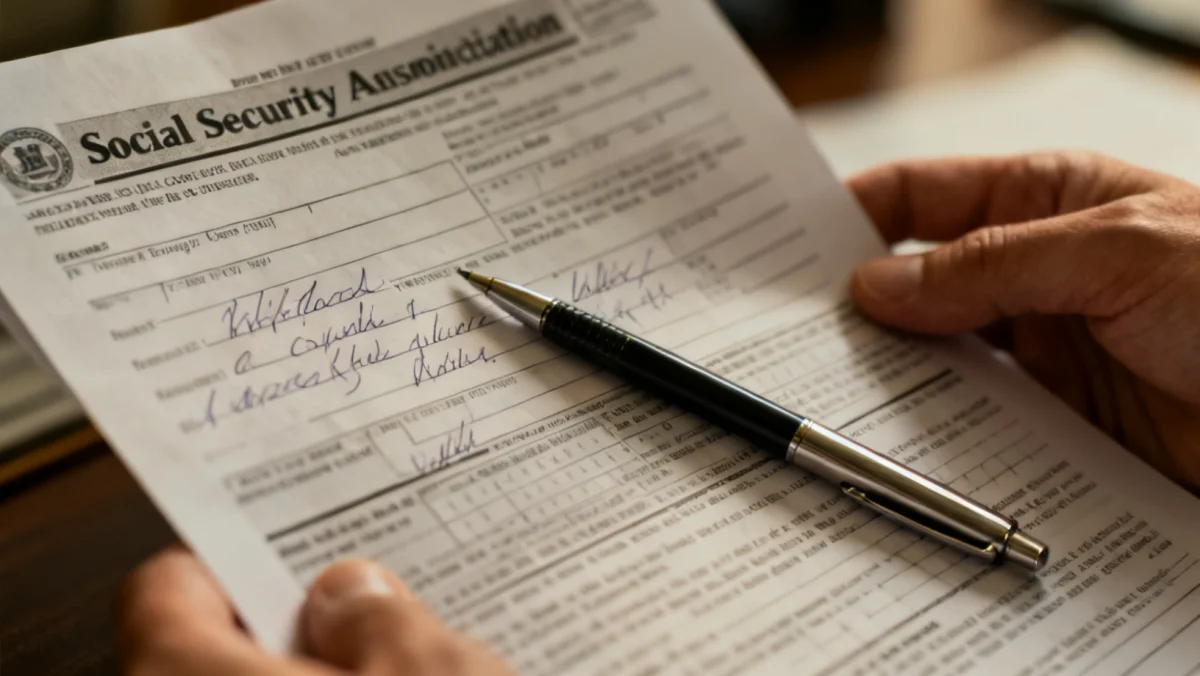
In some cases, additional documents might be requested, such as divorce decrees, military discharge papers (DD-214), or medical records if you are applying for benefits due to disability. It’s always best to have as much relevant documentation as possible to avoid any back-and-forth with the SSA.
The Application Process: Step-by-Step in 2026
Applying for surviving spouse benefits can seem daunting, but breaking it down into manageable steps makes the process clearer. In 2026, the Social Security Administration continues to offer multiple avenues for application, though speaking directly with an SSA representative is often the most effective approach for survivor benefits.
Unlike some other Social Security benefits, survivor benefits cannot typically be applied for online. This is because the SSA needs to verify numerous details and often requires original documents or certified copies. Therefore, you’ll generally need to contact them directly by phone or in person.
How to apply for survivor benefits
The SSA aims to make this process as accessible as possible, even during a difficult time. Preparing for your application by gathering all necessary documents beforehand will make these steps much easier to navigate.
- Contact the SSA: Call the Social Security Administration at 1-800-772-1213 (TTY 1-800-325-0778) to report the death and initiate the application process.
- Schedule an Appointment: You may be able to complete the application over the phone, or you might need to schedule an in-person appointment at your local Social Security office.
- Gather Documents: Ensure you have all the required documents ready for your phone interview or in-person appointment.
- Complete the Application: An SSA representative will guide you through the application form, ensuring all details are correctly filled out.
During your conversation with the SSA, don’t hesitate to ask questions. The representatives are there to help you understand your options and ensure you receive all the benefits you’re entitled to. They can also explain potential benefits for dependent children, if applicable, and how those might affect your overall benefit amount.
Maximizing Your Benefits and Understanding Potential Reductions
While the primary goal is to secure surviving spouse benefits, it’s equally important to understand how to maximize them and be aware of factors that could lead to reductions. The amount you receive depends on several variables, including your age when you claim benefits, your own earnings, and the deceased’s earnings record.
Claiming benefits at your full retirement age (FRA) will generally provide you with 100% of the deceased spouse’s basic benefit amount. However, you can claim benefits as early as age 60 (or age 50 if disabled). Claiming early will result in a permanent reduction of your monthly benefit amount, so careful consideration is advised.
Factors affecting your benefit amount
Several elements play a role in determining the final amount of surviving spouse benefits you will receive. Being informed about these factors can help you make strategic decisions about when and how to claim.
- Age at Claiming: Claiming at age 60 results in a reduced benefit; waiting until your full retirement age maximizes it.
- Your Own Earnings: If you are working and under your full retirement age, your benefits may be reduced if your earnings exceed certain limits.
- Deceased’s Earnings Record: The higher your deceased spouse’s lifetime earnings, the higher your potential benefit.
- Other Benefits: If you are also eligible for your own Social Security retirement benefits, you may only receive the higher of the two amounts, not both.
It’s crucial to consult with an SSA representative or a financial advisor to understand the optimal claiming strategy for your specific situation. They can help you project different scenarios and understand the long-term financial implications of claiming at various ages.
Navigating Special Circumstances and Appeals
Life rarely fits neatly into boxes, and the Social Security system acknowledges this by having provisions for special circumstances. Understanding these can be crucial, especially if your situation deviates from the standard eligibility criteria. Additionally, knowing how to appeal a decision is vital if your initial application is denied.
Special circumstances might include situations like remarriage, concurrent eligibility for multiple types of benefits, or unique family structures. The SSA reviews each case individually, so it’s important to provide all relevant details, even if they seem unconventional. For example, remarriage after age 60 (or 50 if disabled) generally does not affect your eligibility for surviving spouse benefits.
When to consider an appeal
If your application for surviving spouse benefits is denied, don’t despair. You have the right to appeal the decision. The appeals process involves several levels, and many denials are overturned upon review, especially if new information or clarification is provided.
- Reconsideration: The first step, where your case is reviewed by someone not involved in the original decision.
- Hearing by an Administrative Law Judge (ALJ): If reconsideration is denied, you can request a hearing with an ALJ.
- Appeals Council Review:1: If the ALJ denies your claim, you can ask the Appeals Council to review the decision.
- Federal Court Review: The final step, if all other appeals are unsuccessful.
It is highly recommended to seek assistance from an attorney specializing in Social Security benefits if you need to appeal a decision. They can help gather additional evidence, prepare your case, and represent you during hearings, significantly increasing your chances of a successful outcome. Understanding these avenues for recourse provides an important layer of protection for your rights.
| Key Aspect | Brief Description |
|---|---|
| Eligibility | Determined by relationship, age, and deceased’s work history. Includes widows, widowers, and divorced spouses. |
| Three-Month Window | Crucial for securing retroactive payments back to the month of death and ensuring timely processing. |
| Required Documents | Death certificate, marriage certificate, personal ID, deceased’s SSN, and bank information are essential. |
| Benefit Optimization | Claiming age, personal earnings, and deceased’s earnings impact the final benefit amount. |
Frequently Asked Questions About Survivor Benefits in 2026
No, typically you cannot apply for surviving spouse benefits online. The Social Security Administration usually requires you to contact them directly by phone or visit a local office. This allows them to verify complex details and ensure all necessary documentation is correctly submitted for your specific situation.
If you remarry before age 60 (or age 50 if you are disabled), you generally cannot receive benefits as a surviving spouse. However, if you remarry after age 60 (or age 50 if disabled), your remarriage will not affect your eligibility for surviving spouse benefits.
Yes, dependent unmarried children under 18 (or 19 if still in high school) or disabled children of any age (if disabled before age 22) can receive benefits regardless of whether the surviving parent is eligible or chooses to claim benefits for themselves. Their eligibility is based on the deceased parent’s work record.
Surviving spouse benefits are generally calculated based on the deceased worker’s primary insurance amount (PIA). This is the full retirement benefit the deceased was entitled to. Your benefit amount can be reduced if you claim early, or increased if the deceased delayed claiming their own retirement benefits past their full retirement age.
Yes, a one-time lump-sum death payment of $255 can be paid to the surviving spouse if they were living with the deceased. If there is no eligible surviving spouse, it can be paid to a child who is eligible for benefits on the deceased’s record. This payment is typically made automatically upon application for other survivor benefits.
Conclusion
Navigating the period after losing a spouse is undoubtedly one of life’s most difficult journeys. While emotional healing takes time, securing your financial future by understanding and claiming surviving spouse benefits 2026 from Social Security is a crucial step. By acting within the recommended three-month window, gathering the necessary documents diligently, and engaging with the Social Security Administration, you can ensure that you receive the support you are entitled to. Remember, these benefits are a vital safety net designed to provide stability during a time of immense change, offering a measure of peace of mind as you begin to rebuild.