Annuities in 2025: A Practical Guide to Retirement Income Planning

Annuities in 2025 offer diverse strategies for retirement income planning, providing guaranteed payouts, tax-deferred growth, and protection against market volatility to ensure a stable financial future.
Are you wondering how to secure your financial future in an ever-changing economic landscape? Understanding the latest on annuities in 2025: a practical guide to retirement income planning is more crucial than ever. This guide will help you navigate the complexities of annuities, ensuring you make informed decisions for a stable and comfortable retirement.
Understanding Annuities: The Basics Reimagined for 2025
Annuities have long been a cornerstone of retirement planning, offering a way to convert a lump sum or series of payments into a guaranteed income stream. In 2025, the landscape of annuities continues to evolve, reflecting new economic realities, technological advancements, and shifts in investor preferences.
It’s essential to look beyond traditional perceptions and understand how these financial products are adapting to meet contemporary needs.
At their core, annuities are contracts between you and an insurance company. You pay the insurer, and in return, they promise to pay you regular income payments, either immediately or at some point in the future. This income can last for a specific period or for the rest of your life, providing a crucial safety net in retirement.
What’s New in Annuities for 2025?
The annuity market in 2025 is characterized by increased personalization and flexibility. Insurers are introducing more hybrid products that blend features from different annuity types, allowing for greater customization to individual financial goals and risk tolerances.
Expect to see enhanced riders and benefits designed to address concerns like inflation, long-term care costs, and legacy planning, making annuities more versatile than ever.
- Technological Integration: Digital platforms are simplifying annuity selection and management, offering more transparent comparisons and streamlined application processes.
- Focus on Longevity Risk: Products are increasingly tailored to address the challenge of outliving savings, with stronger lifetime income guarantees.
- ESG Considerations: A growing number of annuity options are incorporating environmental, social, and governance (ESG) factors, appealing to socially conscious investors.
The Fundamental Role of Annuities in Retirement
Despite the innovations, the fundamental purpose of an annuity remains steadfast: to provide predictable income in retirement. This predictability is invaluable, especially when facing market volatility or uncertain interest rates. Annuities can complement other retirement savings vehicles like 401(k)s and IRAs, creating a diversified income portfolio that reduces reliance on market performance alone.
In 2025, annuities are seen not just as an income source, but as a strategic tool for risk management. They protect against sequence-of-returns risk and provide a baseline income that can cover essential living expenses, allowing other investments to grow without immediate withdrawal pressures. This foundational security enables retirees to approach their later years with greater peace of mind and financial stability.
Types of Annuities: Choosing the Right Fit for Your Future
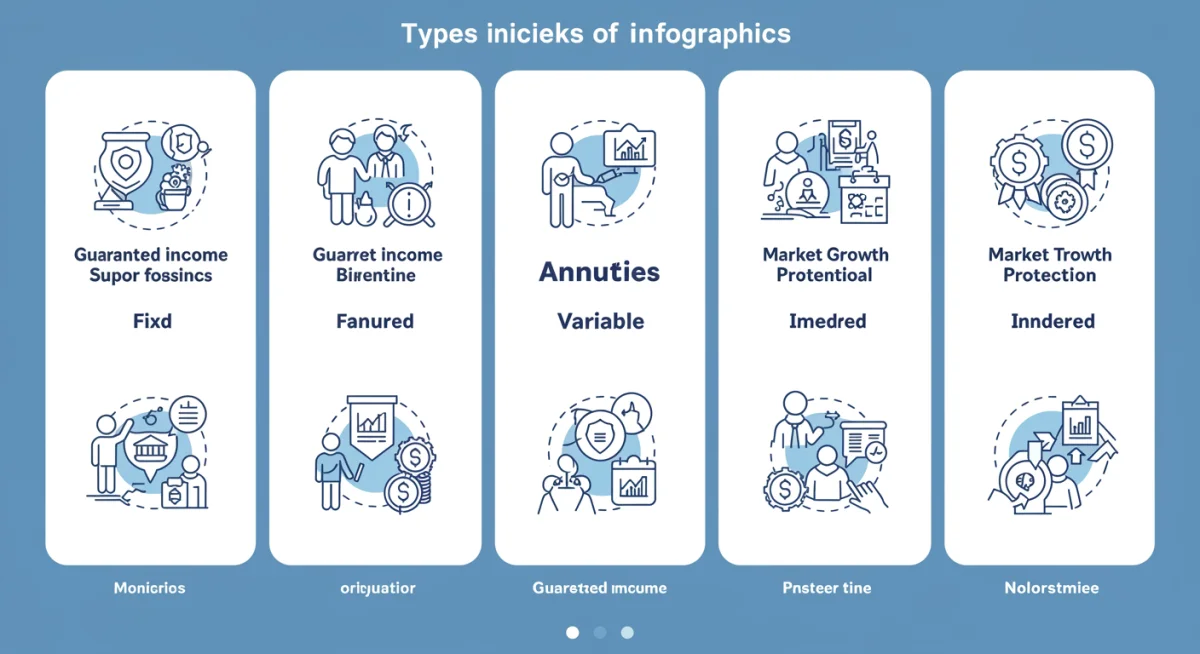
Navigating the world of annuities can seem daunting due to the variety of options available. However, understanding the core differences between immediate, deferred, fixed, variable, and indexed annuities is key to selecting the product that best aligns with your retirement goals and risk tolerance. Each type offers distinct advantages and considerations, making it crucial to assess your personal financial situation carefully.
In 2025, the distinctions between these types are becoming even more nuanced, with hybrid products blurring the lines. Yet, the foundational categories remain the starting point for any exploration into annuity planning. Your choice will largely depend on when you need income, how much risk you’re willing to take, and your desire for growth potential versus guaranteed stability.
Immediate vs. Deferred Annuities
Immediate annuities, as the name suggests, begin paying out almost immediately after you purchase them, typically within a year. They are ideal for those already in retirement or nearing it, who need a steady income stream right away. The income amount is fixed at the time of purchase, providing certainty.
Deferred annuities, on the other hand, allow your money to grow tax-deferred over time before you begin receiving payments. This accumulation phase can last for many years, making them suitable for individuals who are still working and planning for retirement far in the future. When you’re ready to retire, you can annuitize the contract to start receiving payments or take a lump sum withdrawal.
Fixed, Variable, and Fixed Indexed Annuities
- Fixed Annuities: These offer a guaranteed interest rate for a set period, providing predictable growth and income. They are the simplest and least risky type, appealing to those who prioritize safety and stability over potential higher returns.
- Variable Annuities: With variable annuities, your money is invested in subaccounts, similar to mutual funds. The value of your annuity and subsequent income payments can fluctuate based on the performance of these investments. While they offer growth potential, they also carry market risk.
- Fixed Indexed Annuities (FIAs): FIAs offer a middle ground. Their growth is linked to a market index (like the S&P 500) but also includes a floor to protect against losses and a cap on potential gains. This provides market participation without the direct downside risk, making them attractive for those seeking moderate growth with principal protection.
Choosing the right annuity type requires careful consideration of your financial goals, risk tolerance, and time horizon. Speaking with a financial advisor specializing in retirement planning can provide invaluable guidance in this decision-making process. They can help you weigh the pros and cons of each annuity type in the context of your overall financial strategy.
Benefits of Annuities in Your 2025 Retirement Plan
Annuities offer a unique set of benefits that can significantly enhance the stability and security of your retirement income plan in 2025. Beyond simply providing an income stream, they address several key concerns that retirees often face, from outliving their savings to managing tax liabilities. Understanding these advantages is crucial for anyone considering annuities as part of their financial strategy.
The evolving financial landscape of 2025, characterized by fluctuating interest rates and market uncertainties, further highlights the value proposition of annuities. Their ability to provide predictable income and mitigate certain risks makes them an attractive option for a broad range of retirees seeking peace of mind.
Guaranteed Income for Life
One of the most compelling benefits of annuities is the promise of guaranteed income for life, or for a specified period. This feature can alleviate the fear of outliving your savings, a common concern as life expectancies continue to rise. With a lifetime annuity, you receive regular payments no matter how long you live, providing a reliable income floor for your essential expenses.
- Longevity Protection: Shields you from the risk of depleting your savings during an extended retirement.
- Budgeting Certainty: Provides a predictable cash flow, making it easier to manage your monthly budget without worrying about market fluctuations.
- Peace of Mind: Knowing a portion of your income is guaranteed can reduce financial stress and allow you to enjoy your retirement more fully.
Tax-Deferred Growth and Other Advantages
Annuities offer tax-deferred growth, meaning you don’t pay taxes on the investment gains until you begin withdrawing money. This allows your money to compound more rapidly over time, potentially leading to a larger sum when you annuitize. This tax advantage can be particularly beneficial for those in higher income brackets during their working years.
Beyond tax deferral, annuities can also offer other advantages. They typically bypass probate, allowing for a quicker and smoother transfer of assets to beneficiaries. Some annuities also come with optional riders that can protect against inflation, provide death benefits, or offer long-term care coverage, adding layers of financial security to your retirement plan.
Integrating Annuities into Your Overall Retirement Strategy
Annuities are most effective when viewed as one component within a comprehensive retirement strategy, rather than a standalone solution. In 2025, successful retirement planning involves a holistic approach that balances various financial instruments to achieve diverse goals: growth, income, and risk management. Integrating annuities thoughtfully can significantly strengthen your overall financial picture.
The key is to understand how an annuity complements your existing assets, such as 401(k)s, IRAs, and other investments. It’s about creating a diversified portfolio where each element plays a specific role in securing your financial future. This integration ensures that you leverage the unique benefits of annuities without over-relying on any single financial product.
Balancing Growth and Guaranteed Income
Your retirement portfolio should ideally strike a balance between assets that offer growth potential and those that provide guaranteed income. Annuities excel at the latter, offering a reliable income stream that can cover your essential living expenses. This allows your other, more growth-oriented investments to remain invested longer, potentially yielding greater returns without the pressure of immediate withdrawals.
For example, you might allocate a portion of your savings to a fixed or fixed indexed annuity to secure a baseline income, while the remainder is invested in equities or mutual funds for long-term growth. This strategy provides both security and the opportunity for your wealth to expand. It’s a dynamic approach that adapts to your evolving financial needs and market conditions.
Considering Your Risk Tolerance and Time Horizon
The type of annuity and how it integrates into your plan should be heavily influenced by your personal risk tolerance and time horizon. If you are decades away from retirement, a deferred annuity with growth potential might be suitable. If you are nearing or in retirement and prioritize stability, an immediate or fixed annuity could be a better fit.
It’s also important to consider your health and family history when making these decisions. Annuities with lifetime income features are particularly valuable if you anticipate a long retirement. A financial advisor can help you assess these personal factors and craft a tailored strategy that effectively incorporates annuities into your overall retirement blueprint for 2025 and beyond.
Key Considerations Before Purchasing an Annuity in 2025
Before committing to an annuity, it’s imperative to conduct thorough due diligence. While annuities offer attractive benefits for retirement income planning, they are complex financial products with specific terms, fees, and implications that vary significantly between providers and product types.
Making an informed decision in 2025 requires a clear understanding of these factors to ensure the annuity truly aligns with your financial objectives and personal circumstances.
Rushing into an annuity purchase without proper research can lead to dissatisfaction or, worse, a product that doesn’t meet your needs. Consider this section a checklist of critical questions and areas to explore before signing any contract. Your financial future depends on a well-considered choice.
Understanding Fees, Charges, and Surrender Periods
Annuities, like most financial products, come with various fees and charges. These can include administrative fees, mortality and expense charges (especially with variable annuities), and rider fees for additional benefits. It’s crucial to obtain a clear breakdown of all costs associated with the annuity you are considering, as these can impact your net returns and income.
Another significant consideration is the surrender period. This is a timeframe, typically ranging from 5 to 10 years, during which if you withdraw more than a certain percentage of your principal, you will incur surrender charges. These charges can be substantial, so ensure you understand the surrender schedule and are comfortable with the liquidity restrictions before purchasing.
Inflation, Interest Rates, and Your Annuity Choice
- Inflation Impact: Inflation can erode the purchasing power of fixed annuity payments over time. Consider annuities with inflation protection riders or those that offer variable or indexed growth potential to mitigate this risk.
- Interest Rate Environment: The prevailing interest rate environment in 2025 will influence the payout rates of immediate and fixed annuities. A rising rate environment might suggest waiting to purchase a fixed annuity, while falling rates could make locking in a higher rate more attractive.
- Market Conditions: For variable and fixed indexed annuities, understanding current and projected market conditions is vital, as these influence potential growth and caps on returns.
Always consider how economic factors might impact your annuity’s performance and income stream. A thorough analysis of these elements will help you select an annuity that offers both security and adequate growth potential in the long run. Consulting with a financial expert can provide valuable insights into these complex market dynamics.
The Future of Annuities: Trends and Innovations for 2025 and Beyond
The annuity market is not static; it’s a dynamic sector constantly evolving to meet the changing needs of retirees and the broader economic landscape. In 2025, we are witnessing several significant trends and innovations that are reshaping how annuities are designed, distributed, and utilized. These advancements aim to make annuities more appealing, flexible, and effective in providing long-term financial security.
Staying informed about these forward-looking developments is critical for anyone planning their retirement income. The annuities of tomorrow promise greater personalization, enhanced digital accessibility, and more robust solutions for a longer, more uncertain retirement period. Let’s delve into what’s on the horizon.
Personalization and Hybrid Products
One of the most prominent trends in 2025 is the move towards highly personalized annuity solutions. Insurers are developing more hybrid products that combine features from different annuity types, allowing for greater customization. This means you can find annuities that blend the security of fixed income with the growth potential of indexed or variable options, tailored to your specific risk profile and income needs.
These hybrid models often include flexible riders that can be added or removed, such as long-term care benefits, guaranteed withdrawal benefits, or enhanced death benefits. The goal is to create a modular product that can adapt to individual life changes and financial goals, moving away from a one-size-fits-all approach.
Technological Advancements and Digital Accessibility
- Simplified Research and Comparison: New digital platforms and AI-powered tools are making it easier for consumers to research, compare, and understand annuity products, increasing transparency.
- Streamlined Application Processes: Online applications and digital signatures are reducing paperwork and speeding up the purchasing process, making annuities more accessible.
- Robo-Advisors Integration: Annuities are increasingly being integrated into robo-advisor platforms, offering automated guidance and portfolio allocation strategies that include guaranteed income solutions.
The digital transformation is making annuities more approachable for a wider audience, breaking down traditional barriers to entry. This increased accessibility, combined with personalized options, positions annuities as a more integral part of modern retirement planning, especially for younger generations who are comfortable with digital financial management.
Working with a Financial Advisor for Annuity Decisions
The complexity and long-term implications of annuity contracts make working with a qualified financial advisor an invaluable step in your retirement planning process. In 2025, an experienced advisor can provide expert guidance, helping you navigate the myriad of options and ensure that any annuity purchase aligns perfectly with your broader financial goals and risk tolerance. Their expertise can prevent costly mistakes and optimize your retirement income strategy.
A good advisor does more than just sell you a product; they act as a fiduciary, putting your best interests first. They will conduct a comprehensive review of your financial situation, understand your objectives, and then recommend solutions that are truly suited to your individual needs. This personalized approach is crucial for making informed decisions about annuities.
Identifying Your Needs and Goals
Before recommending any specific annuity, a financial advisor will take the time to deeply understand your financial needs, retirement goals, and current financial health. This involves assessing your existing assets, liabilities, income sources, and expenses. They will also discuss your risk tolerance, your desired lifestyle in retirement, and any legacy planning objectives you may have.
This needs assessment is foundational. It ensures that any annuity considered is not just a standalone product, but an integrated component of your overall financial plan, working in harmony with your other investments and income streams. Without this step, it’s difficult to ascertain if an annuity is the right fit, or which type would be most beneficial.
Evaluating Annuity Options and Providers
- Product Comparison: Advisors can compare various annuity products from different providers, highlighting the pros and cons of each in relation to your specific situation. They have access to a wider range of products and deeper insights into market trends.
- Fee Analysis: They will help you understand the fee structures, surrender charges, and other costs associated with each annuity, ensuring transparency and preventing unexpected expenses.
- Provider Due Diligence: An advisor can research the financial strength and reputation of annuity providers, giving you confidence in the long-term security of your contract.
Moreover, a financial advisor stays updated on the latest regulations and innovations in the annuity market for 2025, providing you with current and relevant advice. Their objective perspective and specialized knowledge are indispensable in making an informed and strategic decision about incorporating annuities into your retirement income planning.
| Key Aspect | Description for 2025 |
|---|---|
| Guaranteed Income | Annuities provide predictable, often lifetime, income streams for retirement security. |
| Tax Advantages | Growth is tax-deferred until withdrawals, potentially boosting overall returns. |
| Diversification | Complements other investments by reducing market risk and providing stability. |
| Evolving Products | 2025 sees more personalized, flexible, and technologically integrated annuity options. |
Frequently Asked Questions About Annuities in 2025
The primary benefit of an annuity in 2025 is its ability to provide a guaranteed income stream, often for life. This feature significantly reduces the risk of outliving your savings, offering financial security and peace of mind during your retirement years, regardless of market performance.
New hybrid annuities in 2025 combine features from various traditional types, such as fixed, variable, and indexed. They offer greater flexibility and personalization, allowing for a blend of guaranteed income, market participation, and optional riders for benefits like long-term care or enhanced death benefits, tailored to individual needs.
Annuities are not suitable for everyone. While they offer guaranteed income and tax deferral, they also come with fees and liquidity restrictions. Their suitability depends on individual financial goals, risk tolerance, and existing retirement assets. A financial advisor can help determine if an annuity fits your specific situation.
Inflation is a critical factor in 2025. Fixed annuities may see their purchasing power erode over time. Consider annuities with inflation protection riders or those linked to market performance (like indexed or variable annuities) to help maintain your income’s value against rising costs of living.
Consulting a financial advisor is crucial due to the complexity of annuities, their long-term nature, and varying fees. An advisor can assess your unique financial situation, explain different annuity types, compare providers, and ensure the chosen product aligns with your overall retirement income planning goals.
Conclusion
Navigating the world of retirement income planning in 2025 requires a clear understanding of all available tools, and annuities stand out as a powerful option for securing a stable financial future. From providing guaranteed lifetime income to offering tax-deferred growth and protection against market volatility, annuities have evolved to meet diverse needs. By carefully considering the various types, understanding associated fees, and integrating them thoughtfully into your broader financial strategy, you can leverage annuities to build a robust and resilient retirement plan. Remember, personalized advice from a qualified financial advisor is invaluable in making informed decisions that align with your unique goals and ensure peace of mind for years to come.