2026 Early College Programs: Time and Money Savings Guide
Comparing 2026 early college programs reveals diverse pathways to accelerate higher education, offering substantial time and financial savings by earning college credits while still in high school, preparing students for future academic success.
As we look towards 2026, the landscape of higher education continues to evolve, presenting innovative opportunities for students to gain a competitive edge. One of the most impactful pathways is through early college programs 2026, which allow high school students to earn college credits, sometimes even an associate’s degree, before receiving their high school diploma. This guide delves into the various early college options available, offering a comprehensive comparison to help you determine which program best aligns with your academic goals and financial constraints, ultimately saving you both time and money in your educational journey.
Understanding the Early College Landscape in 2026
The concept of early college has gained significant traction, especially as the costs of higher education continue to rise. In 2026, these programs are more refined and accessible than ever, offering a diverse array of structures and benefits. Essentially, early college programs bridge the gap between high school and college, providing an accelerated and often more affordable route to a college degree. They are designed to challenge students academically while simultaneously easing the financial burden on families.
These programs typically fall into several categories, each with its unique advantages and considerations. Understanding these distinctions is crucial for making an informed decision about which path is right for you. The goal is not just to save money, but to ensure a smooth transition into higher education and a strong foundation for future academic and career success.
Types of Early College Models
- Dual Enrollment: Students take college courses, often on a college campus or online, while still enrolled in high school. These credits count towards both high school graduation and a college degree.
- Early College High Schools (ECHS): These are distinct high schools designed to allow students to earn an associate’s degree or up to two years of college credit simultaneously with their high school diploma.
- Concurrent Enrollment: Similar to dual enrollment, but often specifically refers to college courses taught by certified high school teachers within the high school setting.
- Early Admission Programs: Students who have completed their junior year of high school enroll full-time in college, foregoing their senior year of high school.
Each model offers a different level of integration and intensity, impacting both the academic experience and the potential for savings. Evaluating the structure and support systems of each type is paramount to choosing the best fit for an individual student’s needs and aspirations. The early college landscape in 2026 emphasizes flexibility and student-centered approaches.
In conclusion, the 2026 early college landscape is rich with opportunities designed to accelerate academic progress and reduce educational costs. By understanding the core distinctions between dual enrollment, ECHS, concurrent enrollment, and early admission, prospective students and their families can begin to narrow down the options that best serve their unique educational and financial objectives.
Dual Enrollment Programs: Flexibility and Cost-Effectiveness
Dual enrollment programs remain a cornerstone of early college initiatives in 2026, offering unparalleled flexibility and often significant cost savings. These programs allow high school students to take college-level courses, typically at a local community college or university, earning credits that count towards both their high school diploma and their future college degree. The beauty of dual enrollment lies in its adaptability; students can choose to take one or two courses per semester, or a more intensive load, depending on their academic readiness and high school schedule.
The financial benefits are particularly attractive. Many states and educational institutions offer dual enrollment courses at a significantly reduced tuition rate, or even free of charge, especially through public community colleges. This can translate into thousands of dollars saved on future college tuition, as students arrive at university with a substantial number of credits already under their belt. Furthermore, the experience of navigating college-level coursework and campus environments provides invaluable preparation for full-time university life.
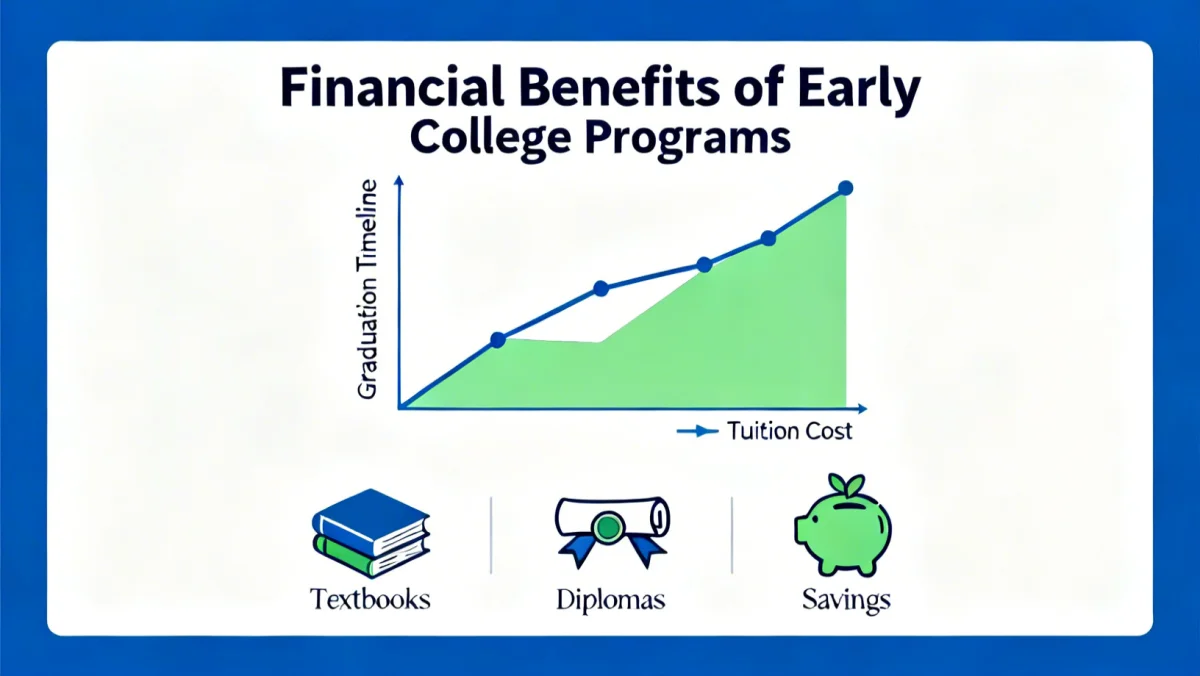
The flexibility extends to course selection as well. Students can often choose from a wide range of subjects, allowing them to explore potential majors, fulfill general education requirements, or simply pursue academic interests that aren’t available at their high school. This exposure can be instrumental in helping students make more informed decisions about their college major and career path, potentially preventing costly changes later on.
Key Advantages of Dual Enrollment
- Reduced Tuition Costs: Often free or significantly discounted, leading to substantial savings on a bachelor’s degree.
- Accelerated Degree Completion: Earning college credits early can shorten the time needed to complete a four-year degree, saving on living expenses and additional tuition.
- Academic Preparedness: Exposure to college-level rigor and expectations helps students transition more smoothly into university studies.
- Exploration of Interests: Opportunity to take courses in diverse fields, aiding in major and career discernment.
However, it’s essential to consider credit transferability. While many dual enrollment credits transfer seamlessly to in-state public universities, out-of-state or private institutions may have different policies. Students and parents should always verify transfer agreements with prospective colleges to maximize the financial and academic benefits of these programs.
In summary, dual enrollment programs in 2026 offer an excellent pathway for motivated students to gain college credits, save money, and prepare for higher education. Their flexibility in course load and subject matter, coupled with often reduced costs, makes them a highly appealing option for a broad range of students looking to get a head start on their college careers.
Early College High Schools (ECHS): A Holistic Approach to Savings
Early College High Schools (ECHS) represent a more integrated and comprehensive approach to early college education in 2026. Unlike dual enrollment, which often involves taking individual courses, ECHS models embed the college experience directly within a specialized high school environment. Students enrolled in ECHS programs typically spend four to five years earning both their high school diploma and an associate’s degree or significant transferable college credits, all at no or very low cost to their families.
The primary appeal of ECHS lies in its holistic design. These schools are specifically structured to support students through rigorous academic pathways, often providing additional mentorship, academic advising, and college readiness workshops. This integrated support system helps students navigate the demands of college-level work while still benefiting from the structure and guidance of a high school setting. The financial savings are substantial, as students essentially complete two years of college tuition-free, which can translate into tens of thousands of dollars saved.
Furthermore, ECHS programs often target underserved populations, aiming to increase access to higher education for students who might not otherwise consider college attainable. By removing financial barriers and providing robust academic and social support, ECHS plays a vital role in promoting educational equity and preparing a diverse student body for college success. The curriculum is carefully designed to ensure that the college credits earned are fully transferable to four-year institutions, minimizing the risk of lost time or money.
Benefits of the ECHS Model
- Associate’s Degree Attainment: Many students graduate with an associate’s degree, providing a strong credential and direct entry into the third year of a bachelor’s program.
- Comprehensive Support: Integrated academic and social support systems help students succeed in challenging coursework.
- Significant Financial Savings: Eliminates tuition costs for the first two years of college, reducing overall student debt.
- College Immersion: Provides a full college experience within a supportive high school framework, fostering readiness for university life.
While ECHS offers significant advantages, it also requires a high level of commitment and academic discipline. Students must be prepared for an accelerated pace and the demands of balancing high school requirements with college coursework. The selection process for ECHS programs can also be competitive, as these schools often have limited enrollment to maintain their personalized approach.
In conclusion, Early College High Schools in 2026 offer a transformative educational experience, providing a structured pathway to earn both a high school diploma and an associate’s degree with significant financial benefits. This model is particularly effective for students seeking a deeply integrated and supportive environment to accelerate their academic journey and save substantially on college costs.
Concurrent Enrollment vs. Early Admission: Which Path is Right for You?
Beyond dual enrollment and ECHS, two other significant early college options in 2026 are concurrent enrollment and early admission programs. While they share the goal of enabling students to earn college credit early, their structures, benefits, and ideal candidates differ considerably, making a careful comparison essential for prospective students.
Concurrent enrollment is often a localized version of dual enrollment, where college-level courses are taught by college-approved high school instructors directly within the high school setting. This model offers convenience and familiarity, as students remain in their high school environment while tackling college curriculum. It removes the logistical challenges of traveling to a college campus and allows students to maintain their high school activities and social networks. The cost savings can still be considerable, as many concurrent enrollment programs are subsidized or offered at a reduced rate by state initiatives or partner institutions. This option is ideal for students who thrive in a familiar setting but are ready for academic rigor.
In contrast, early admission programs are a more radical departure from the traditional high school experience. These programs allow exceptionally mature and academically advanced students to leave high school after their junior year and enroll full-time in college. This means foregoing their senior year of high school and immediately immersing themselves in a university environment. The time savings are immediate and substantial, as students can potentially graduate from college a year earlier. Financially, while students pay full college tuition, the accelerated timeline reduces overall living expenses and the total number of tuition-paying years. This path is best suited for highly independent and self-motivated students who are eager to fully embrace college life.
Comparing Program Characteristics
- Location: Concurrent enrollment is typically at the high school; early admission is full-time on a college campus.
- Age/Maturity: Concurrent enrollment suits students wanting to stay in high school; early admission requires significant maturity and independence.
- Cost Structure: Concurrent enrollment often subsidized; early admission involves full college tuition but saves a year of expenses.
- Social Integration: Concurrent enrollment maintains high school social life; early admission integrates into college social life.
The choice between concurrent enrollment and early admission hinges on a student’s personal readiness, academic ambition, and desire for independence. Concurrent enrollment offers a gentle transition, while early admission provides a rapid immersion into higher education. Both paths offer distinct advantages in terms of saving time and money, but the ‘right’ choice depends on individual circumstances.
Ultimately, concurrent enrollment provides a convenient and often cost-effective way to earn college credits within a familiar environment, while early admission offers a faster, albeit more intense, route to a college degree for highly prepared students. Evaluating these differences carefully will help students and families select the most appropriate early college pathway for 2026.
Maximizing Financial and Time Savings: Key Strategies for 2026
Beyond simply enrolling in an early college program, strategic planning is essential to truly maximize the financial and time savings in 2026. It’s not enough to just earn credits; ensuring those credits count towards your intended degree and choosing programs with the best financial structures are crucial steps. A proactive approach can transform a good program into an exceptional investment.
One of the most critical strategies is diligent research into credit transfer policies. Before committing to any early college program, prospective students should contact their target four-year universities to confirm which specific courses and how many credits will be accepted. This due diligence prevents the disheartening and costly scenario of earning credits that don’t apply to your degree program, effectively negating any potential savings. Many universities have publicly available transfer guides or articulation agreements that can provide this vital information.
Another powerful strategy involves understanding the financial aid and scholarship opportunities specifically for early college students. While many early college programs are already low-cost or free, additional scholarships can help cover associated expenses like textbooks, materials, or transportation. Some states and private organizations offer grants or scholarships designed to support students pursuing dual enrollment or ECHS pathways. Proactive searching and application can significantly enhance the financial benefits.
Strategies for Optimal Savings
- Verify Credit Transferability: Always confirm with target universities that earned credits will apply to your degree.
- Seek Financial Aid/Scholarships: Explore specific grants and scholarships for early college students to cover additional costs.
- Plan Your Course Load Wisely: Strategically select courses that fulfill both high school and college general education requirements.
- Consider Program Structure: Evaluate if a free ECHS program or a subsidized dual enrollment option offers the best overall value for your situation.
Furthermore, careful course planning can optimize time savings. By selecting early college courses that satisfy both high school graduation requirements and general education requirements for your desired college major, you create a seamless academic progression. This prevents redundant coursework and ensures every credit earned contributes directly to your ultimate degree, accelerating your path to graduation.
In conclusion, maximizing the financial and time savings from 2026 early college programs requires more than just participation; it demands strategic planning and diligent research. By focusing on credit transferability, exploring financial aid, and carefully planning coursework, students can ensure their early college experience provides the greatest possible return on investment, both academically and financially.
Potential Challenges and How to Overcome Them
While early college programs in 2026 offer significant advantages, it’s also important to acknowledge and prepare for potential challenges. These programs demand a higher level of academic rigor and responsibility than traditional high school, and students may encounter hurdles related to workload, social integration, and financial implications if not properly addressed. Being aware of these challenges and having strategies to overcome them can ensure a smoother and more successful early college experience.
One common challenge is managing the increased academic workload and expectations. College courses move at a faster pace and require more independent study than most high school classes. Students might initially struggle with time management, critical thinking, and self-discipline. To overcome this, students should develop strong organizational skills, utilize academic support services offered by both their high school and the college, and not hesitate to seek help from instructors or mentors. Building a consistent study routine is paramount.
Another potential issue, particularly for students in dual enrollment or early admission programs, is social integration. Leaving the familiar high school environment or balancing two distinct social circles can be isolating. Students in early admission programs might find themselves among older college students, which can present unique social dynamics. Participating in college clubs, student organizations, or study groups can help bridge this gap and foster a sense of belonging. For dual enrollment students, maintaining connections with high school friends while also engaging with college peers is key.
Addressing Common Hurdles
- Academic Adjustment: Develop strong time management, seek tutoring, and utilize college academic support services.
- Social Integration: Actively participate in college campus activities, clubs, or study groups; maintain high school friendships.
- Credit Transfer Issues: Proactively confirm credit acceptance with target universities before taking courses.
- Financial Pitfalls: Research all fees carefully, including textbooks and transportation, and budget accordingly.
Financial challenges can also arise, even with reduced tuition. Hidden costs such as textbooks, lab fees, transportation, or parking can add up. It’s crucial for families to get a clear breakdown of all potential expenses from the program administrators and budget accordingly. Exploring textbook rental options or open educational resources (OER) can help mitigate some of these costs. Furthermore, as mentioned earlier, verifying credit transferability is a financial safeguard against wasted investment.
In conclusion, while early college programs offer immense benefits, they are not without their challenges. By proactively addressing concerns related to academic workload, social adjustment, and potential hidden costs, students can effectively navigate these hurdles. Preparedness and a strategic approach are key to transforming potential obstacles into valuable learning experiences on the path to higher education success.
The Future of Early College Programs and 2026 Trends
Looking ahead to 2026, early college programs are poised for continued growth and evolution, driven by a persistent demand for affordable and efficient pathways to higher education. Emerging trends suggest an even greater emphasis on personalization, technology integration, and alignment with workforce needs. Understanding these future directions can help prospective students and educators anticipate the landscape and make the most of these opportunities.
One significant trend expected in 2026 is the increased integration of virtual and hybrid learning models. The advancements in educational technology will likely lead to more sophisticated online early college courses, offering greater flexibility for students in rural areas or those with demanding schedules. This expansion of access will further democratize early college opportunities, allowing more students to participate regardless of their geographical location or high school’s physical capacity. Hybrid models, combining online instruction with occasional in-person sessions, will also become more prevalent.
There will also be a stronger focus on career-aligned early college pathways. As the job market evolves, early college programs will increasingly tailor their curricula to provide students with credits and even certifications directly relevant to high-demand industries. This could include specialized associate’s degrees in areas like cybersecurity, healthcare support, or advanced manufacturing, preparing students not just for a bachelor’s degree but for immediate entry into a skilled workforce if they choose. This emphasis on vocational and technical tracks within early college will enhance their value proposition.
Anticipated 2026 Early College Trends
- Expanded Virtual & Hybrid Options: Greater accessibility and flexibility through online and blended learning.
- Career-Aligned Pathways: Increased focus on programs leading to in-demand IT, healthcare, and trade certifications.
- Personalized Learning Plans: More customized academic advising and course sequencing to fit individual student goals.
- Enhanced Data Analytics: Use of data to improve program effectiveness, student success, and transferability.
Furthermore, expect to see more sophisticated data analytics being used to refine early college programs. Educational institutions will leverage data to better understand student success rates, credit transfer patterns, and long-term academic outcomes. This data-driven approach will lead to continuous improvement in program design, ensuring that early college offerings are as effective and beneficial as possible for students in 2026 and beyond. Personalized academic advising, guided by these insights, will become a hallmark of leading programs.
In conclusion, the future of early college programs in 2026 is bright, characterized by increased accessibility through technology, stronger alignment with career pathways, and data-driven improvements. These trends promise to make early college an even more compelling and effective strategy for students seeking to save time and money while gaining a significant head start on their higher education and career goals.
Making the Right Choice: A Personalized Approach
Choosing the right early college program in 2026 is a deeply personal decision that requires careful consideration of individual student needs, academic goals, and family financial situations. There is no one-size-fits-all solution, and what works best for one student may not be ideal for another. A personalized approach, involving thorough self-assessment and detailed research, is key to unlocking the maximum benefits.
Begin by assessing the student’s academic readiness and maturity level. Early college programs demand strong study habits, self-motivation, and the ability to handle more complex material. A student who thrives in a challenging academic environment and is comfortable with independent learning will likely excel. Conversely, a student who still benefits from more structured guidance might find a full college immersion overwhelming. Honest self-reflection on these aspects is crucial.
Next, consider the student’s long-term academic and career aspirations. Do they have a clear idea of a college major or career path? If so, an early college program that offers courses directly relevant to those interests or even a specialized associate’s degree can be incredibly beneficial. If the student is still exploring options, a more general dual enrollment program allowing for diverse course selection might be more appropriate. The goal is to ensure the early college experience aligns with and supports future objectives.
Factors for Personalized Program Selection
- Student Readiness: Evaluate academic preparedness, maturity, and self-discipline.
- Academic Goals: Align program choice with desired college major and career path.
- Financial Situation: Compare tuition costs, fees, and potential savings across different program types.
- Support Needs: Consider the level of academic and social support available in each program.
- Logistics: Factor in transportation, schedule flexibility, and impact on high school activities.
Finally, a comprehensive review of the financial implications is indispensable. While all early college programs aim to save money, the extent of those savings can vary significantly. Compare tuition costs, fees, potential for scholarships, and the overall impact on the total cost of a bachelor’s degree. Don’t forget to factor in indirect costs like transportation, textbooks, and the potential opportunity cost of missed high school experiences if opting for early admission.
In conclusion, selecting the optimal early college program in 2026 is about finding the best fit for the individual student. By carefully assessing academic readiness, long-term goals, financial considerations, and available support, families can make an informed decision that truly maximizes time and money savings, setting the student on a successful and efficient path to higher education.
| Program Type | Key Benefit |
|---|---|
| Dual Enrollment | Flexible course options, often free or low-cost, earning both high school and college credits. |
| Early College High Schools (ECHS) | Integrated high school and college, often leading to an Associate’s degree at no cost. |
| Concurrent Enrollment | College courses taught at high school, convenient and often subsidized. |
| Early Admission | Full-time college enrollment after junior year, accelerating degree completion by a year. |
Frequently Asked Questions About 2026 Early College Programs
Dual enrollment allows high school students to take individual college courses, while an ECHS is a dedicated high school where students simultaneously earn a high school diploma and often an associate’s degree, offering a more integrated and structured pathway to early college credit.
Many early college programs offer courses at significantly reduced or no tuition, especially for public institutions. By earning college credits while in high school, students reduce the number of costly semesters needed for a bachelor’s degree, leading to substantial savings on tuition and living expenses.
No, credit transferability is not universally guaranteed. While many credits transfer seamlessly to in-state public universities, policies vary. It is crucial to verify with your target four-year institutions about their specific credit transfer policies before enrolling in an early college program.
Early admission programs are ideal for highly mature, academically advanced, and independent students who are ready to forgo their senior year of high school and fully immerse themselves in a college environment. They thrive with less structured guidance.
Key trends include expanded virtual and hybrid learning options for greater accessibility, a stronger focus on career-aligned pathways leading to certifications, personalized learning plans, and the increased use of data analytics to enhance program effectiveness and student outcomes.
Conclusion
In conclusion, the landscape of 2026 early college programs offers an exciting and financially prudent pathway for ambitious students to accelerate their higher education journey. From the flexible credit-earning opportunities of dual enrollment to the holistic associate’s degree attainment through Early College High Schools, and the distinct advantages of concurrent enrollment and early admission, there is a program suited for nearly every aspiring college student. By carefully comparing these options, understanding their unique benefits and challenges, and implementing strategic planning for credit transfer and financial aid, students and families can make informed decisions that significantly save both time and money. The future of early college is bright, promising even more accessible and tailored opportunities to achieve academic success and prepare for the evolving demands of the 21st-century workforce.